


Introduction: The Indian stock market, as represented by the Nifty 50, often presents a dynamic and challenging landscape for traders. Monday, September 8, 2025, was a prime example of this, with a market that, while closing nearly flat, was anything but stable throughout the trading session. This analysis breaks down the day’s events, offering insights into the market’s behavior and the strategies that proved effective.
Chapter 1: The Opening Zone – A False Sense of Security
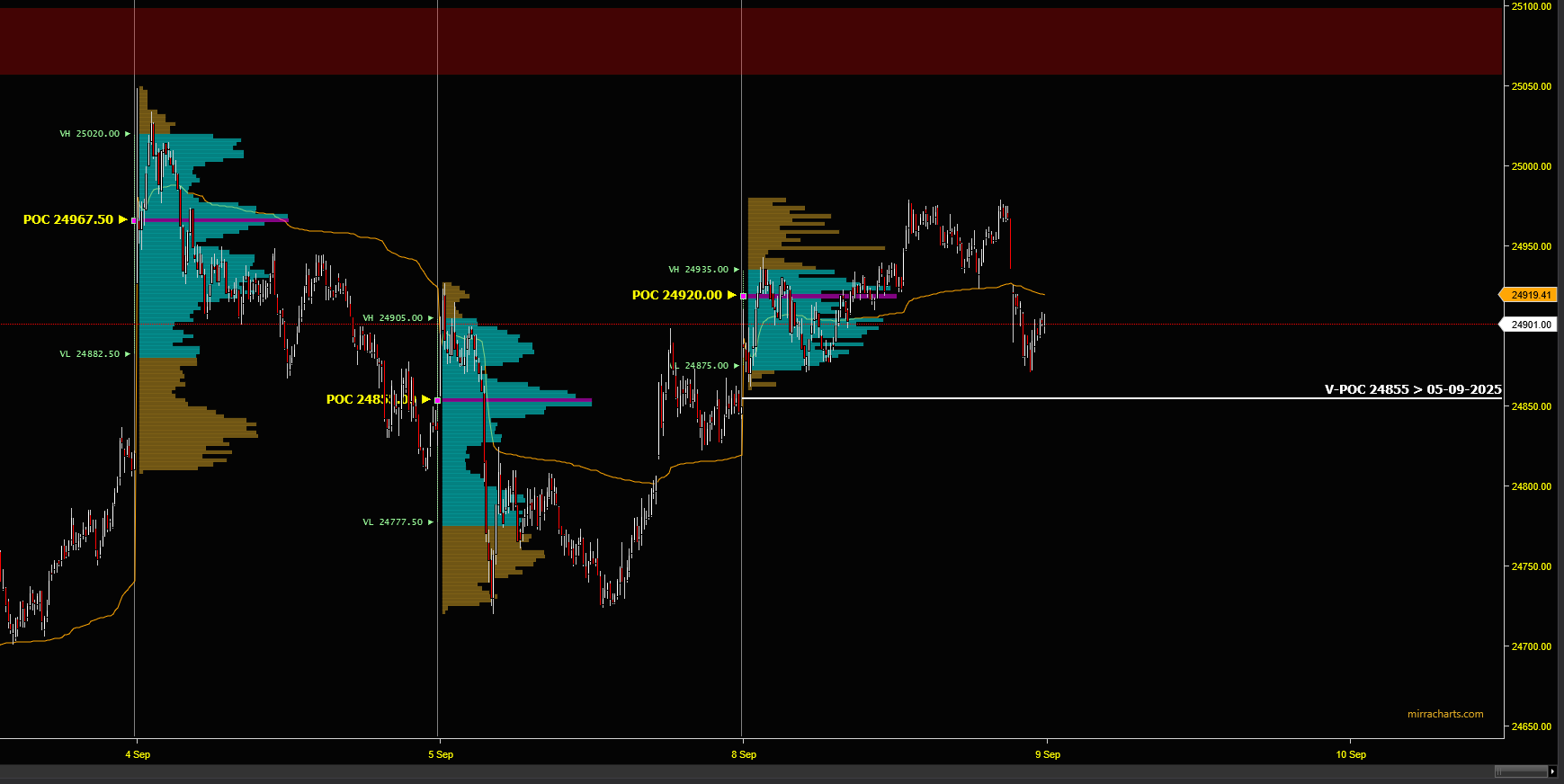
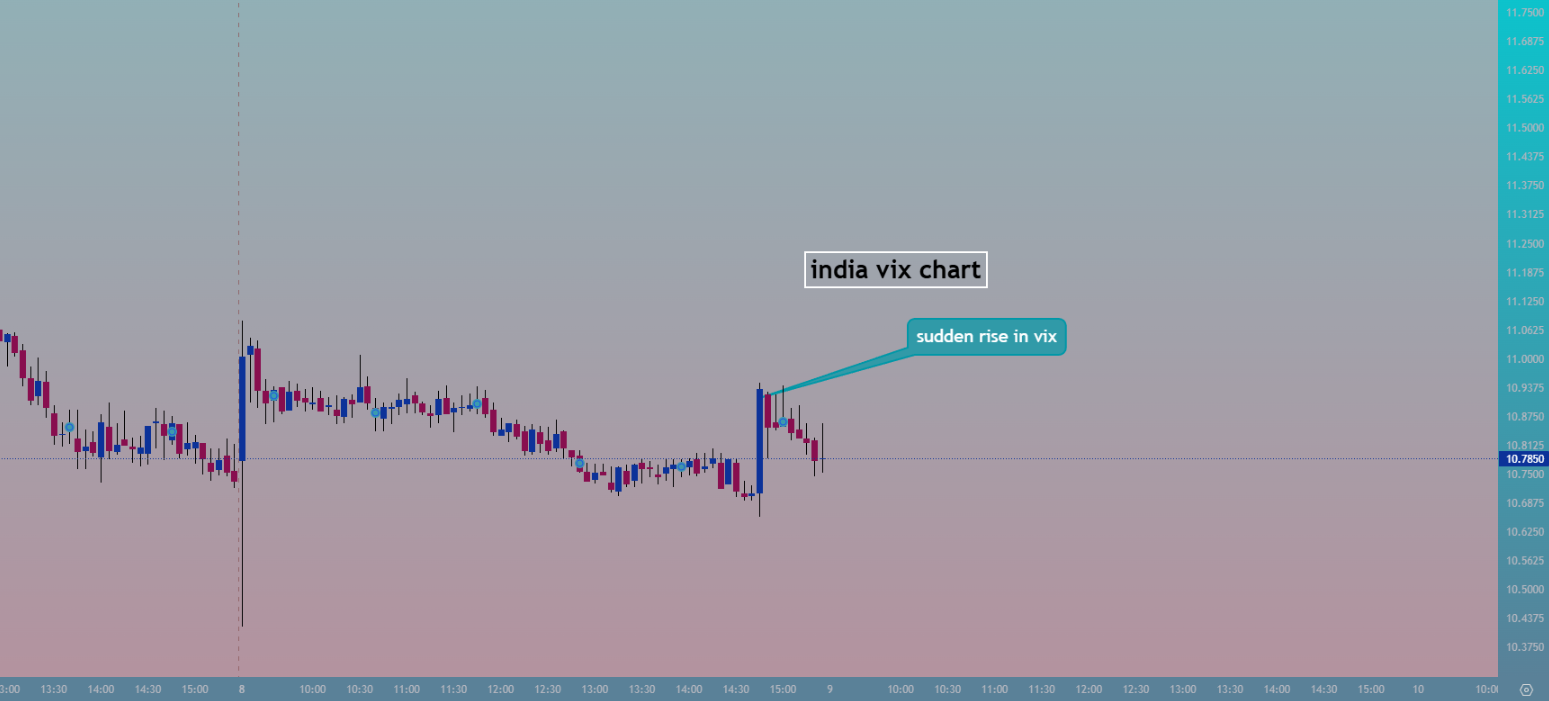
The trading day began on a positive note, with Nifty opening with a significant gap-up of 61.60 points at 24802.60. The index showed early bullish momentum, reaching a high of 24885.50. This initial surge reflected a positive market sentiment, with many anticipating a strong upward move. However, the subsequent price action revealed a different story. The Nifty’s trading range was quite broad, with a low of 24751.55, indicating underlying volatility even in the first few hours. By the close, the Nifty was at 24773.15, marking a marginal gain of 32.15 points (0.13%). The India VIX, a key measure of market volatility, was also up by 0.56%, underscoring the turbulent nature of the day.
Chapter 2: The Early Movement and the Afternoon Shock
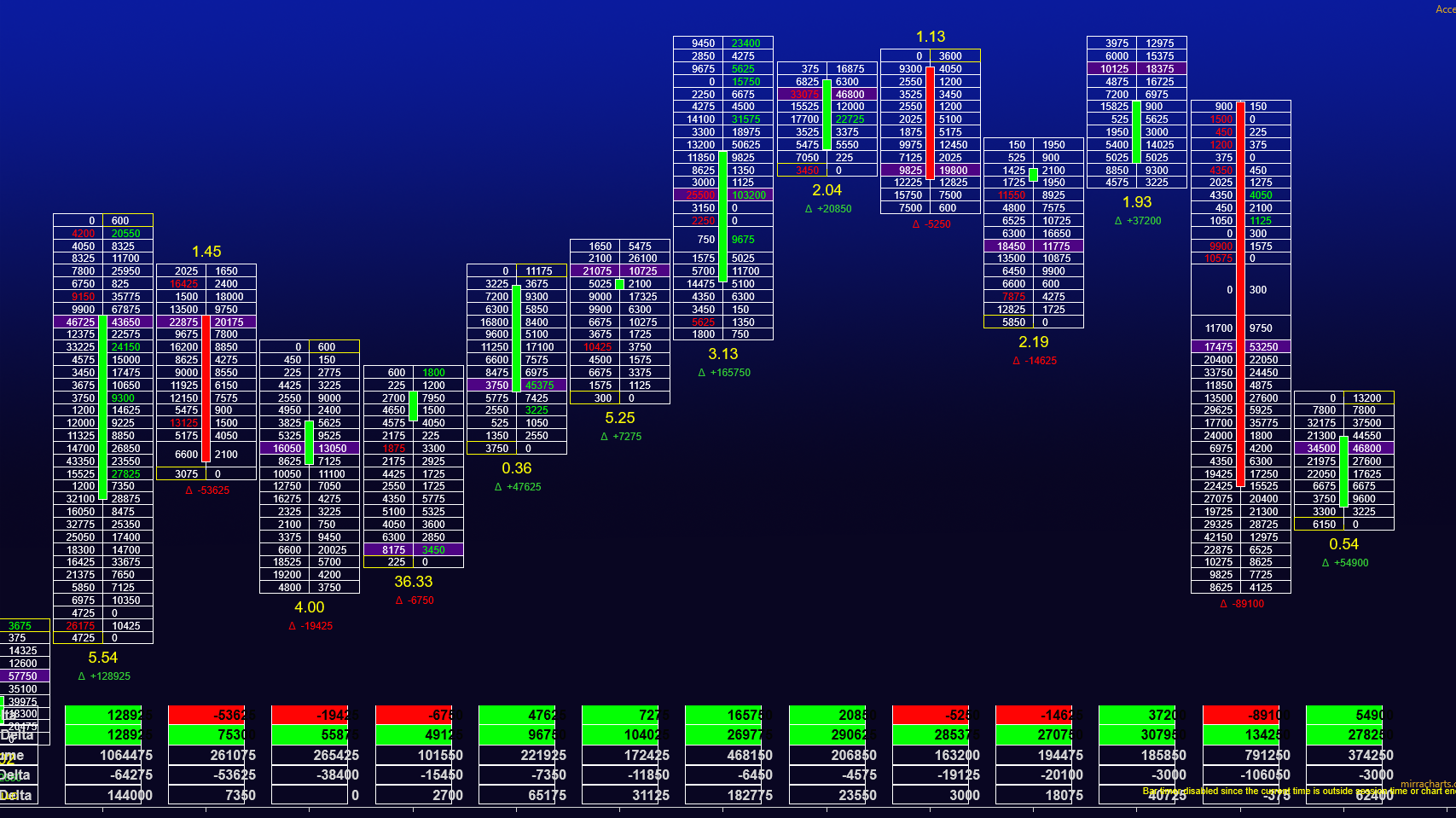
The initial gap-up was fueled by a positive sentiment, but as the session progressed, the market found support around the last Friday’s volume Point of Control (POC) in the Nifty future. The market’s inability to break this support level, coupled with a delta divergence, indicated a potential upside. The Nifty consolidated and moved up, appearing poised to close above the 24800 mark.
However, the late afternoon brought a sharp and rapid sell-off. In a matter of 15 minutes around 3:00 PM, the market plummeted by 100 points, wiping out the gains of the day for many traders. This dramatic swing is a stark reminder of the current market environment, where volatility can materialize in an instant. This is a crucial lesson for traders: never underestimate the potential for rapid reversals, and always have a risk management plan in place.
Why the Volatility and Afternoon Sell-Off?
The market’s erratic behavior today can be attributed to a confluence of factors:
- Global Cues and Geopolitical Uncertainty: Despite positive early signals from global markets, lingering concerns over US-India trade relations, particularly with CEA Anantha Nageswaran’s comments on the potential impact of Trump’s tariffs on India’s GDP, created a cautious mood. Any news hinting at a slowdown or trade friction can trigger profit booking.
- Settlement Holidays and Institutional Behavior: Today being a settlement holiday for certain segments could have also influenced trading activity. Traders may have been squaring off positions to manage their portfolios ahead of the deferred settlements.
- Profit Booking at Key Resistance Levels: As Nifty approached the 24900 level, which has been a key resistance zone, profit-booking likely intensified. This is a natural market reaction as traders with long positions look to book gains at significant price points.
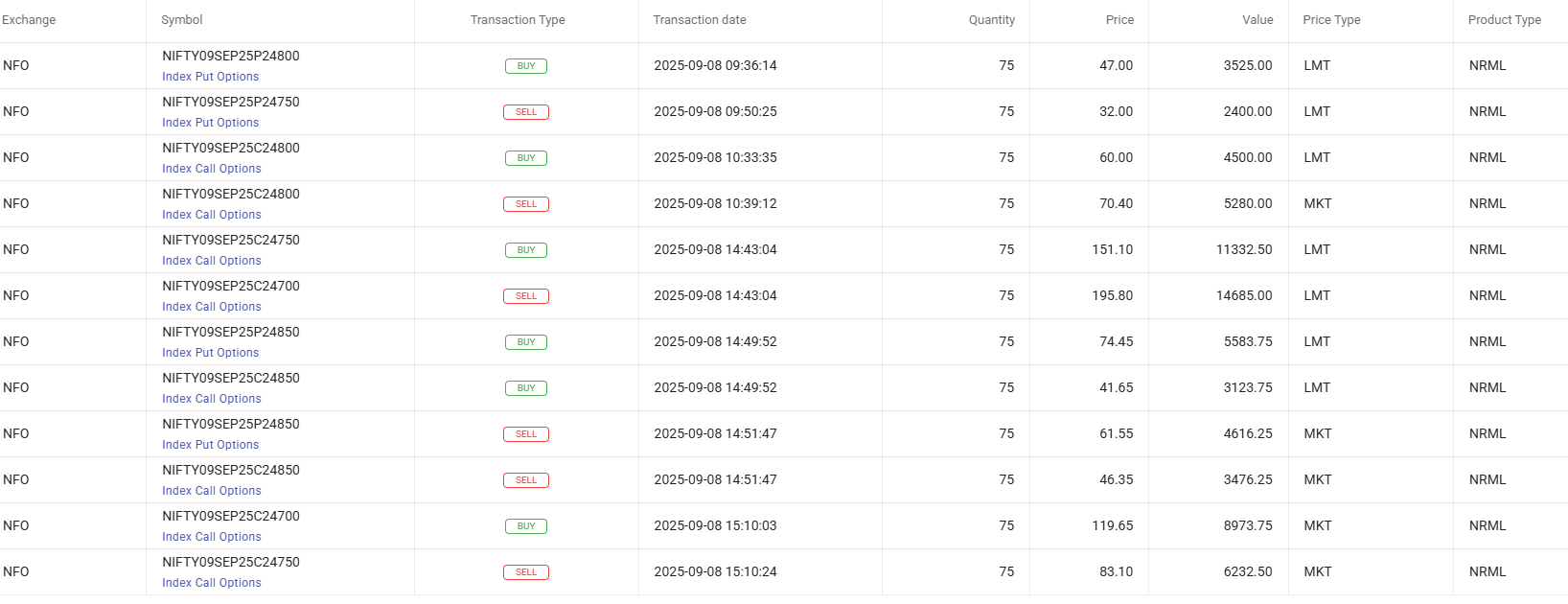
- The Power of Hedging: The day’s events highlight the critical importance of a sound trading strategy, especially one that incorporates hedging. As noted in the opening, a well-executed hedge strategy was the difference between a profitable day and a loss. By using strategies like a protective put or a straddle, traders can mitigate the risk of sudden, sharp price movements. This approach allows for participation in a trending market while providing a safety net against unexpected reversals, a scenario that played out perfectly today.
Chapter 3: Open Interest and Market Sentiment
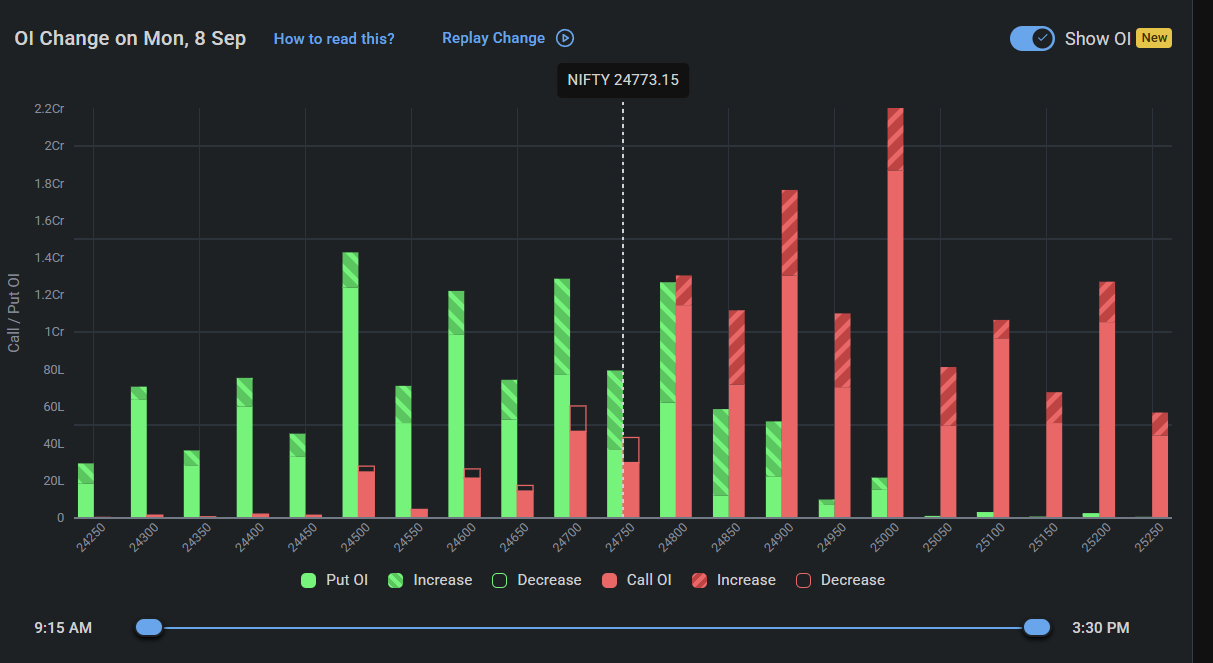
The Open Interest (OI) data provides further insight into market sentiment. The concentration of Call OI at 25000 and Put OI at 24500 indicates that the market expects Nifty to trade within this range for the near term. This data reinforces the idea of a volatile, range-bound market where traders are positioning themselves for swings rather than a strong directional trend.
Chapter 4: Sectoral and Global Insights
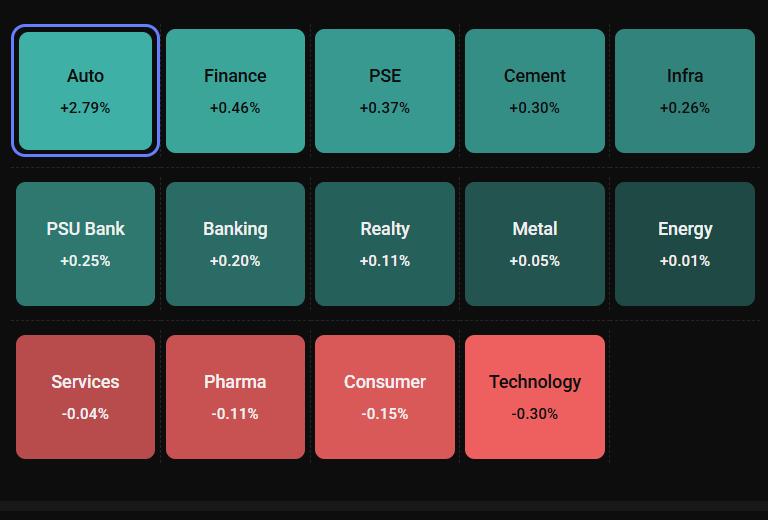
The day saw a clear sectoral rotation. The Auto sector was a major gainer, likely benefiting from a bullish sentiment after recent GST reforms. Conversely, the Technology sector was a notable loser, perhaps due to profit booking or concerns related to global tech industry trends and potential trade frictions.
Globally, the news of the India-Israel bilateral investment treaty provides a positive long-term outlook, but the immediate concern over Trump’s tariffs and its potential impact on India’s GDP, as stated by the CEA, served as a significant headwind.
Conclusion: The Modern Trader’s Mindset
Today’s market action was a masterclass in volatility. The key takeaway for any trader is that in a “flat but volatile” market, traditional long-only or short-only strategies are highly susceptible to sudden shifts. The successful trader in this environment is not just a directional bettor, but a savvy risk manager.
The profit on this day was a direct result of a hedging strategy, which protected the position from the late-afternoon sell-off. The era of the predictable, one-way market is over. The new reality demands a more sophisticated approach. Don’t be swayed by initial momentum; always be prepared for the unexpected. A well-thought-out hedging strategy is no longer a luxury—it’s a necessity for sustainable profitability.
Disclaimer: This analysis is for educational purposes only and is not a recommendation for any investment. The securities market is subject to risks, and it is crucial to consult a qualified financial advisor before making any investment decisions.
Comments are closed