



Chapter 1: Opening Zone
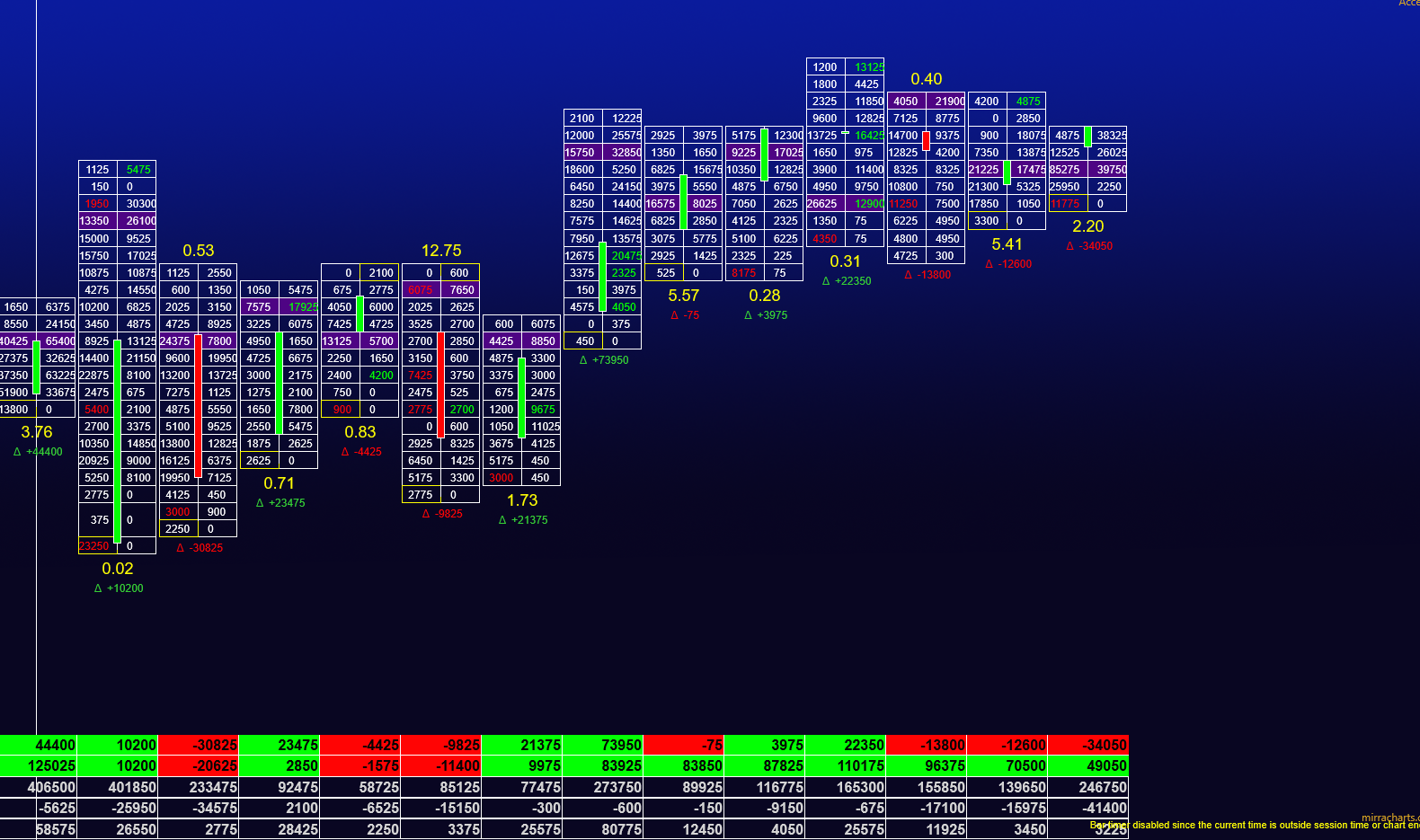
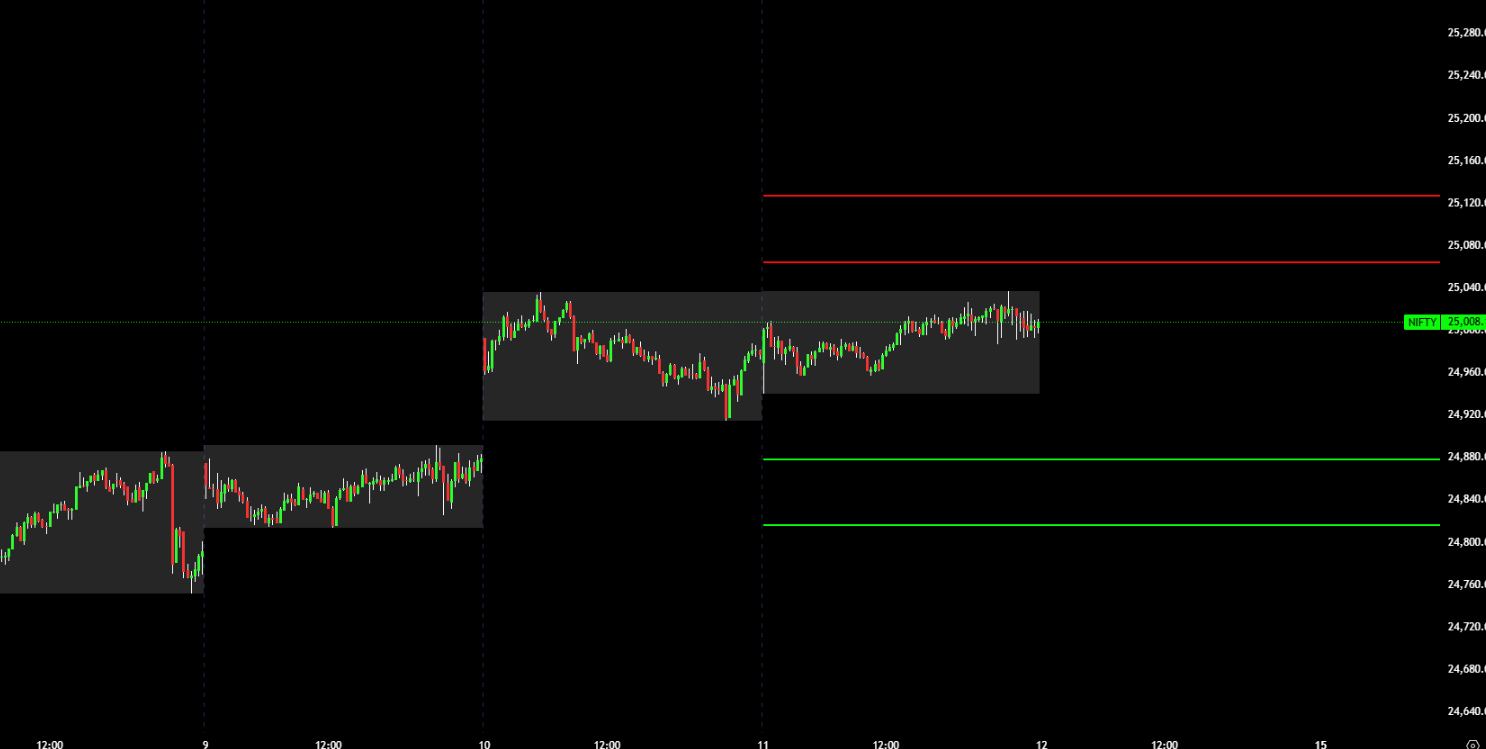
On 11th September, Nifty opened with a modest gap up of 27.60 points at 24,945.50, reaching a high of 25,037.30 and a low of 24,940.15. The index closed flat but slightly positive at 25,005.50, up by 32.40 points (0.13%). The volatility index (VIX) fell by 1.71%, indicating continued low market volatility and subdued price action.
Chapter 2: Early Movement
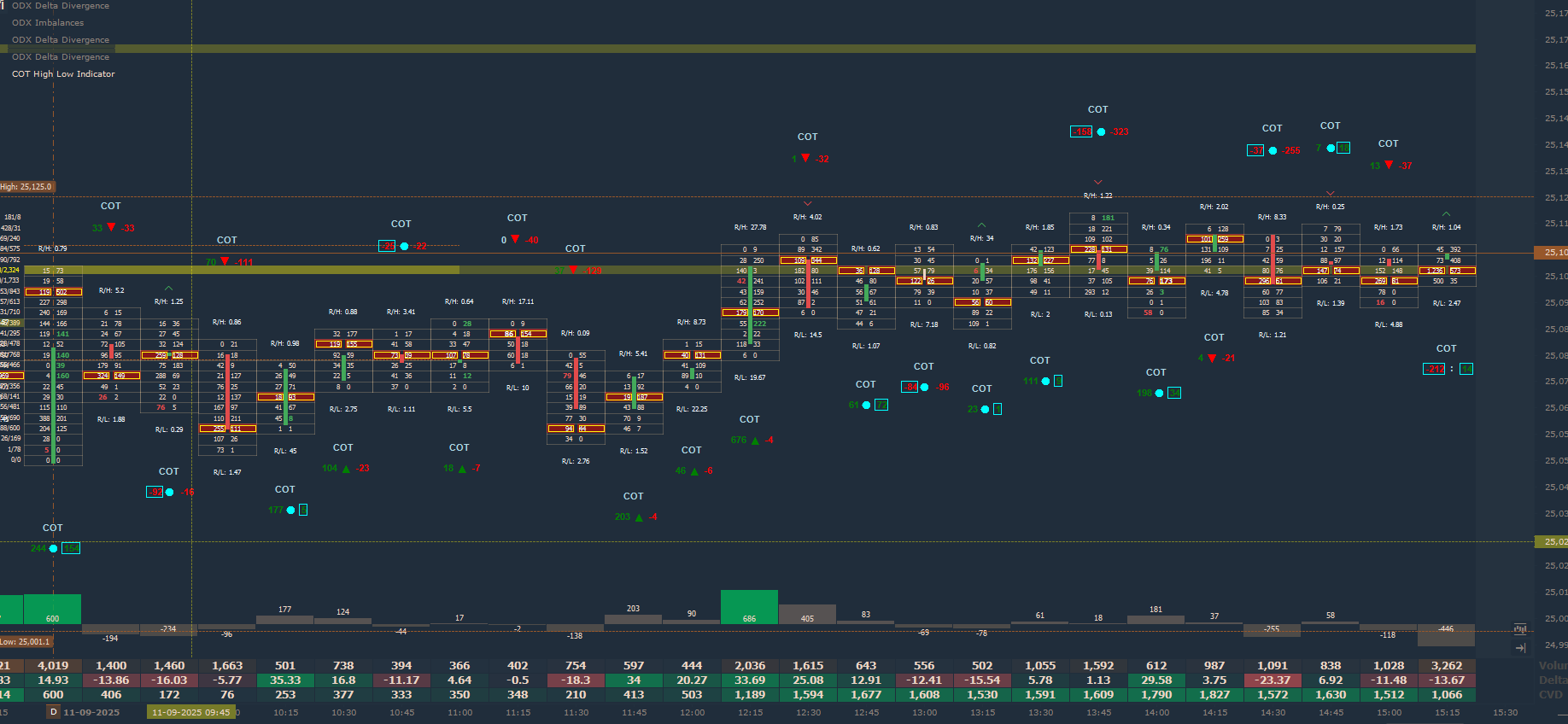
The market started flat, quickly encountering selling pressure reflected by a negative delta of 19,950 and a delta percentage of 17.80%. Interestingly, a delta divergence was observed—the price candle remained green despite negative delta—showing buyers resisted downward pressure, maintaining price stability near the psychologically crucial 25,000 level. The market stayed range-bound, hovering around 25,000 with little excitement, reflecting a consolidation phase. The closing above 25,000 gives a cautious positive signal; however, watching tomorrow’s reaction will be essential.
Bonus Point: Price Zones
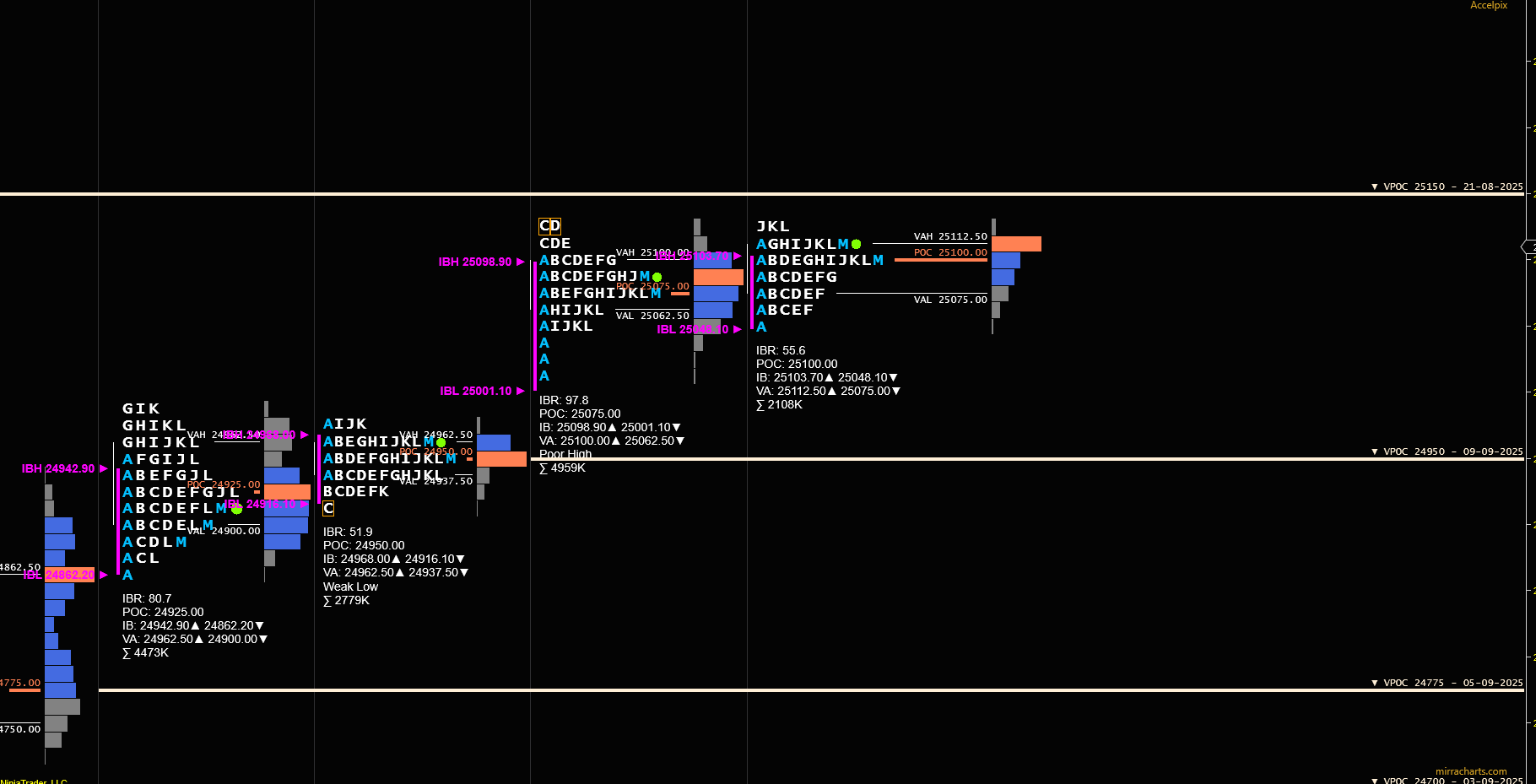
- Point of Control (POC): 25,000
- Value Area High: 25,050
- Value Area Low: 24,950
- Support: 24,850
- Resistance: 25,100
The 25,000 level remains a critical battleground influencing market direction in the near term.
Chapter 3: Open Interest Overview
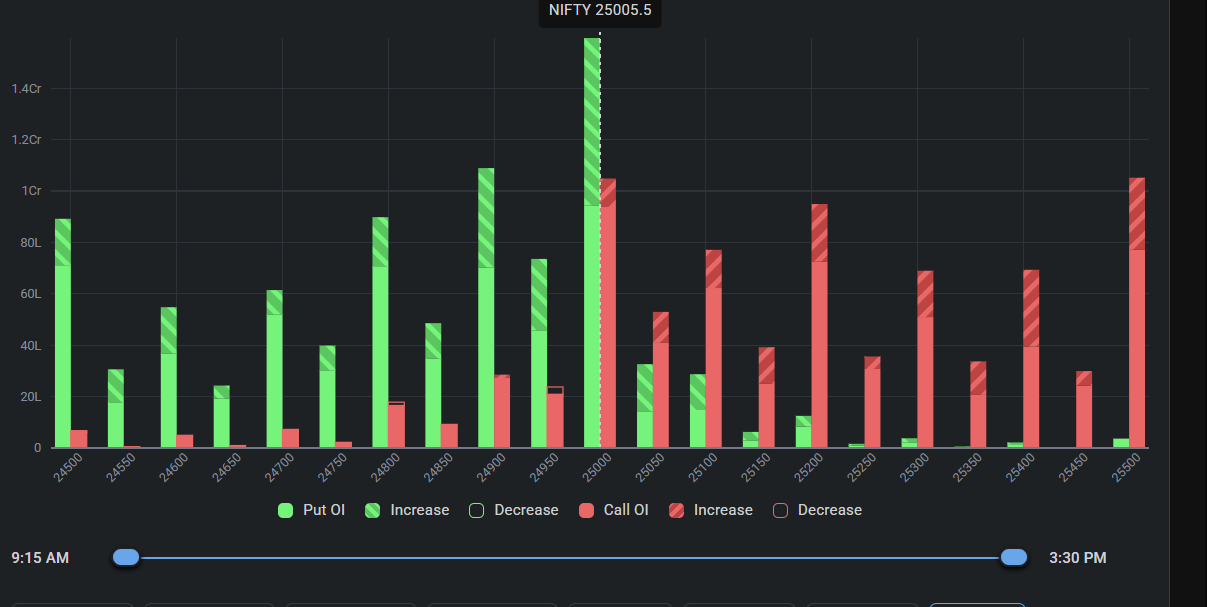
Strong open interest persists at the 25,000 strike for both calls and puts, with put open interest slightly surpassing calls. This balance aligns with the consolidation sentiment, reflecting both buyers and sellers preparing for possible breakout or breakdown scenarios entering the near expiry.
Chapter 4: Volatile Market Dynamics
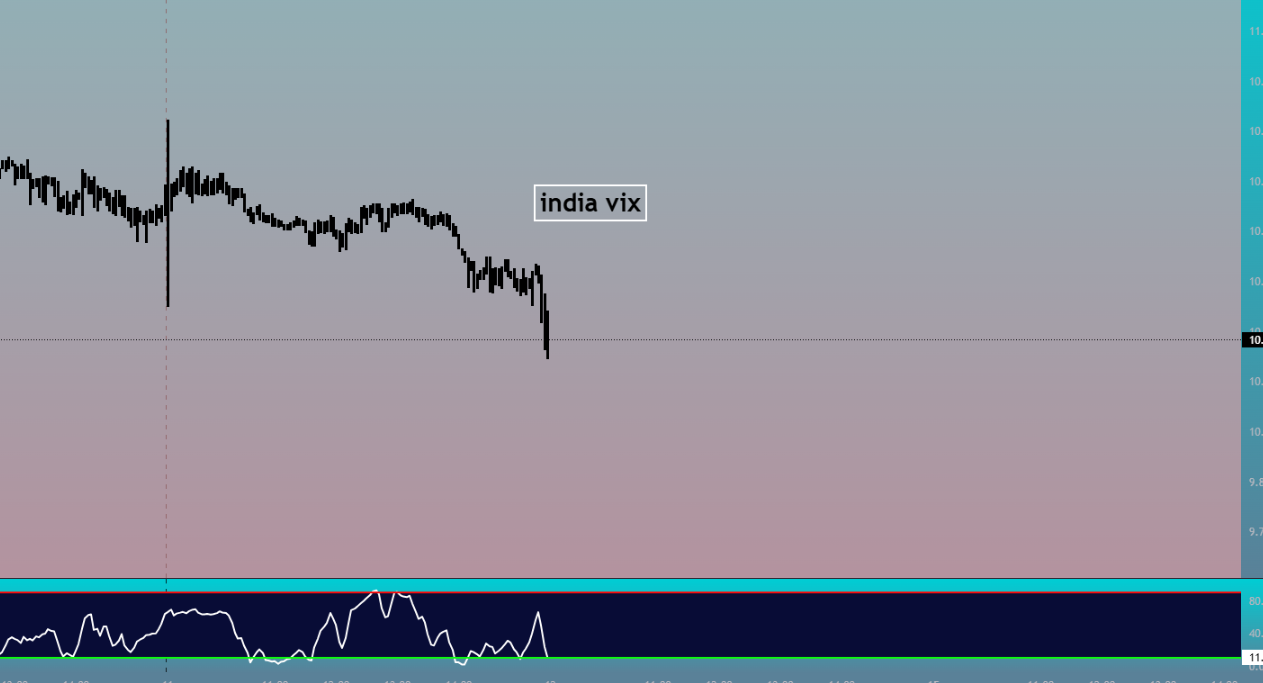
Today’s market experienced low volatility with minimal premium movements. With expiry approaching next week, the overall calmness favored option sellers, but subdued theta decay limited profits from short options strategies. The normal volatility environment confirmed a low-risk but low-reward trading day, typical of consolidation phases.
Chapter 5: Sectoral Movement
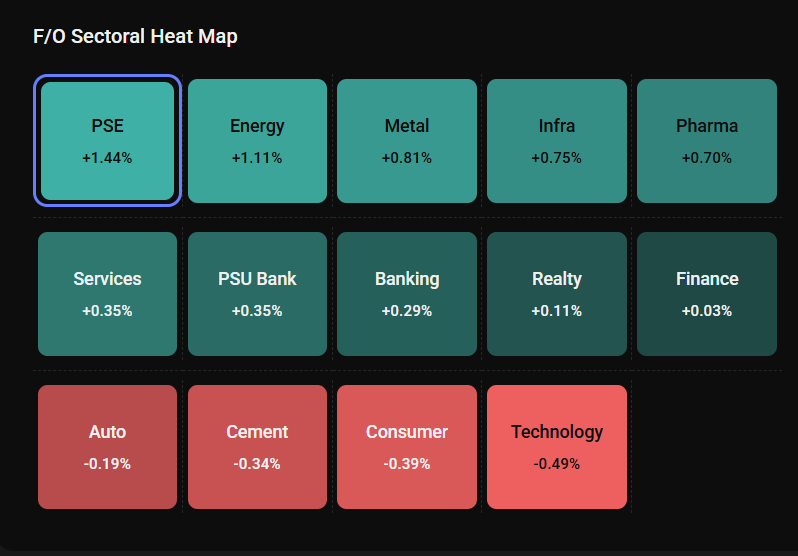
Among sectors, public sector enterprises (PSE) and technology stocks emerged as gainers, balancing muted performances elsewhere. The mixed sectoral trend mirrored the broader market’s indecisive mood.
Chapter 6: Global News Impact
Economic headlines stressed cautious optimism: India’s tax reforms are expected to cushion tariff-driven GDP hits while the Indian rupee’s decline to record lows underscores fragile trade outlooks amid lingering uncertainties in US tariffs, adding to cautious sentiment among traders.
My Trade Summary
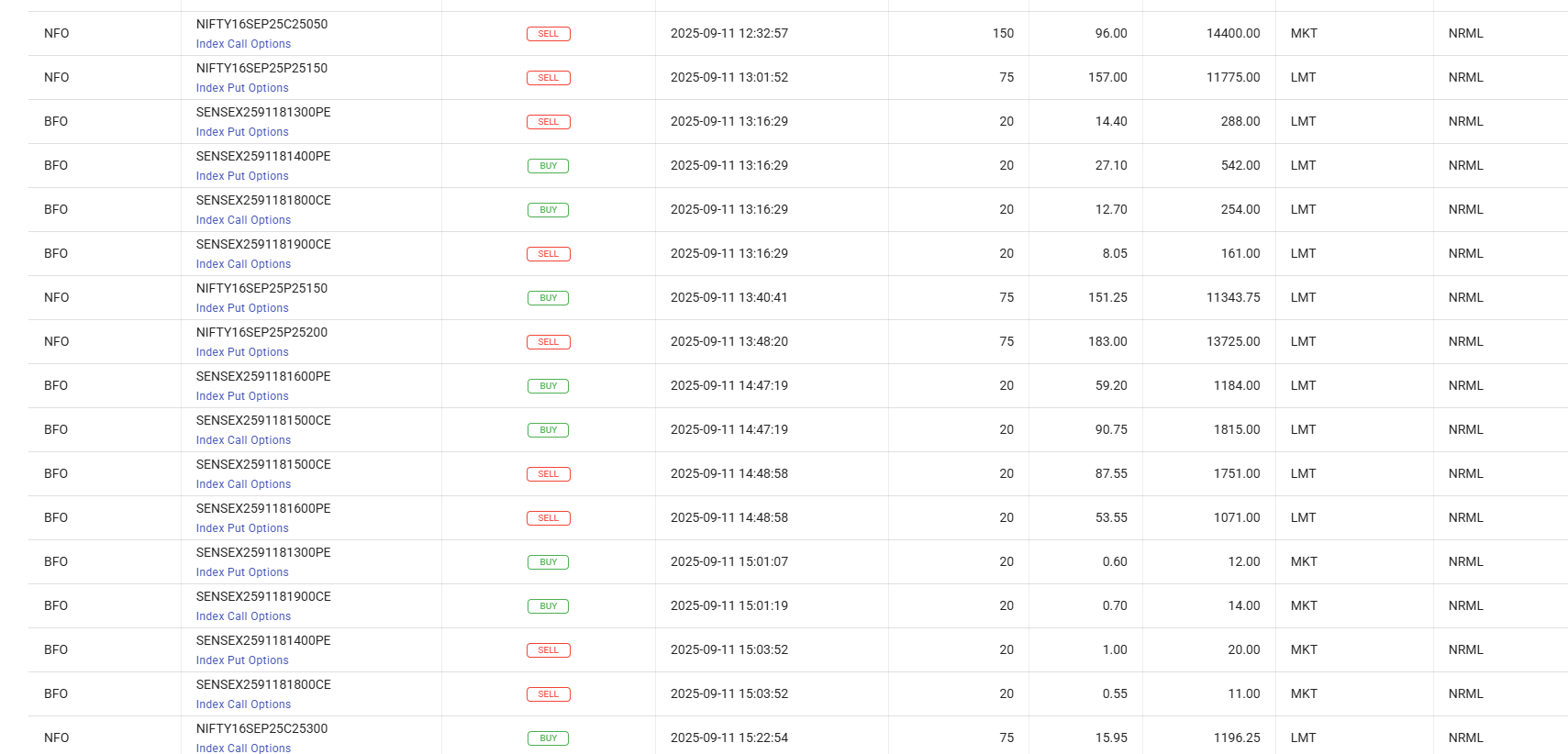
Today’s market showed flat, directionless movement with no clear aggression on either side. I employed a combination of short straddle and short strangle strategies aiming to benefit from expected low volatility and theta decay. However, the very low premium movement limited theta gains, resulting in a low return on investment for the day. Given the market is consolidating with low volatility, this approach suited well to capitalize on rangebound behavior, though patience and discipline remain critical as the market prepares for potential volatility near expiry.
Why Was the Market Flat and Consolidated?
The Indian market oscillated within a narrow range around 25,000, reflecting trader caution ahead of key expiry dates and mixed global cues. While positive domestic news provided support, uncertainties around currency depreciation and US tariff policies created a cautious trading environment. This equilibrium translated into muted price action, low volatility, and balanced open interest, forming a classic consolidation phase before the next market move.
Disclaimer
This blog is for educational purposes only. The author is not SEBI-registered and does not promote any trading platform or product. The securities market carries inherent risks; always consult a qualified financial advisor before making investment decisions. The views shared are personal opinions intended for learning and may be subject to error.
Comments are closed