


The Indian stock market witnessed a significant downturn on August 26, 2025, with the Nifty 50 index closing well below the key psychological level of 24,800. This steep decline, which saw the index shed 255.70 points (1.02%), was primarily triggered by a confluence of global and domestic factors, leaving traders scrambling to manage their positions.

Why Did the Market Fall Today?
The primary catalyst for today’s market sell-off was the escalating trade tensions between the US and India. The US issued a draft notice proposing to levy steep tariffs of up to 50% on a range of Indian goods, with the new duties set to take effect from Wednesday. This impending move has sent a shockwave through the export-oriented sectors of the Indian economy and rattled investor confidence.
Here’s a breakdown of the key drivers behind the market’s negative performance:
- US Trade Tariffs: The proposed 50% tariffs by the Trump administration on Indian goods are a major concern. This move is seen as a significant blow to India’s export sector, particularly for key industries like textiles, gems and jewellery, and auto components, which rely heavily on the US market. The uncertainty surrounding the final impact of these tariffs on corporate earnings and economic growth led to a broad-based selling spree.
- Global Cues: Weakness in other global markets also played a role. Broader concerns about a potential global trade war and the volatility in the US dollar further dampened investor sentiment in India.
My Trading Experience on August 26, 2025
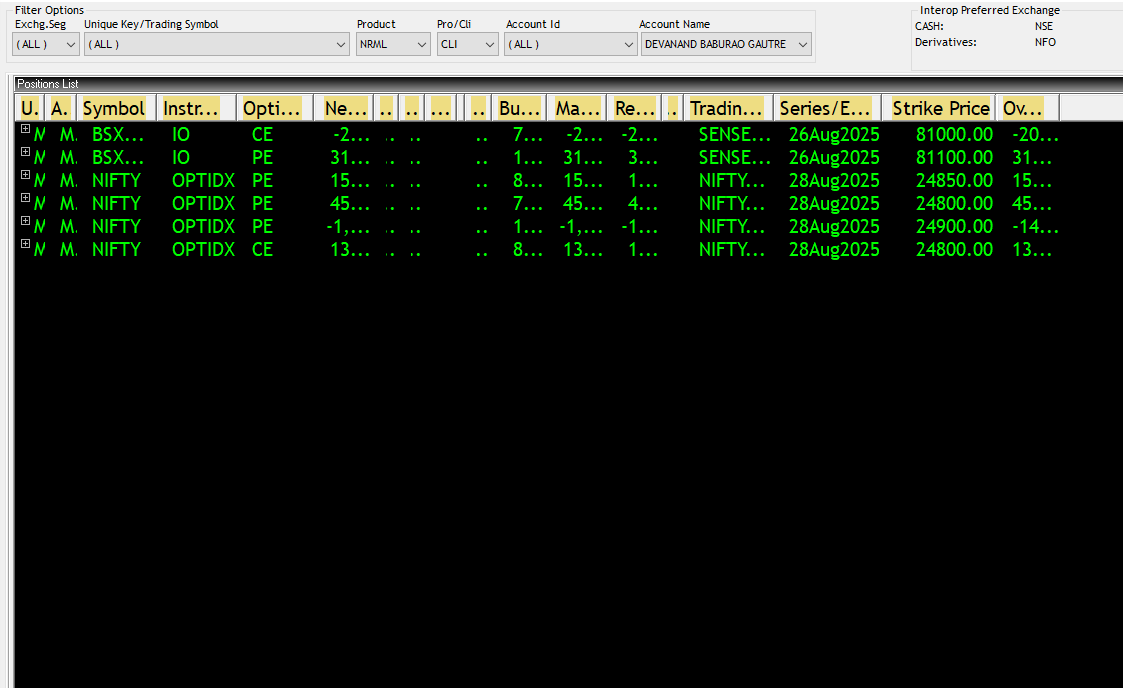
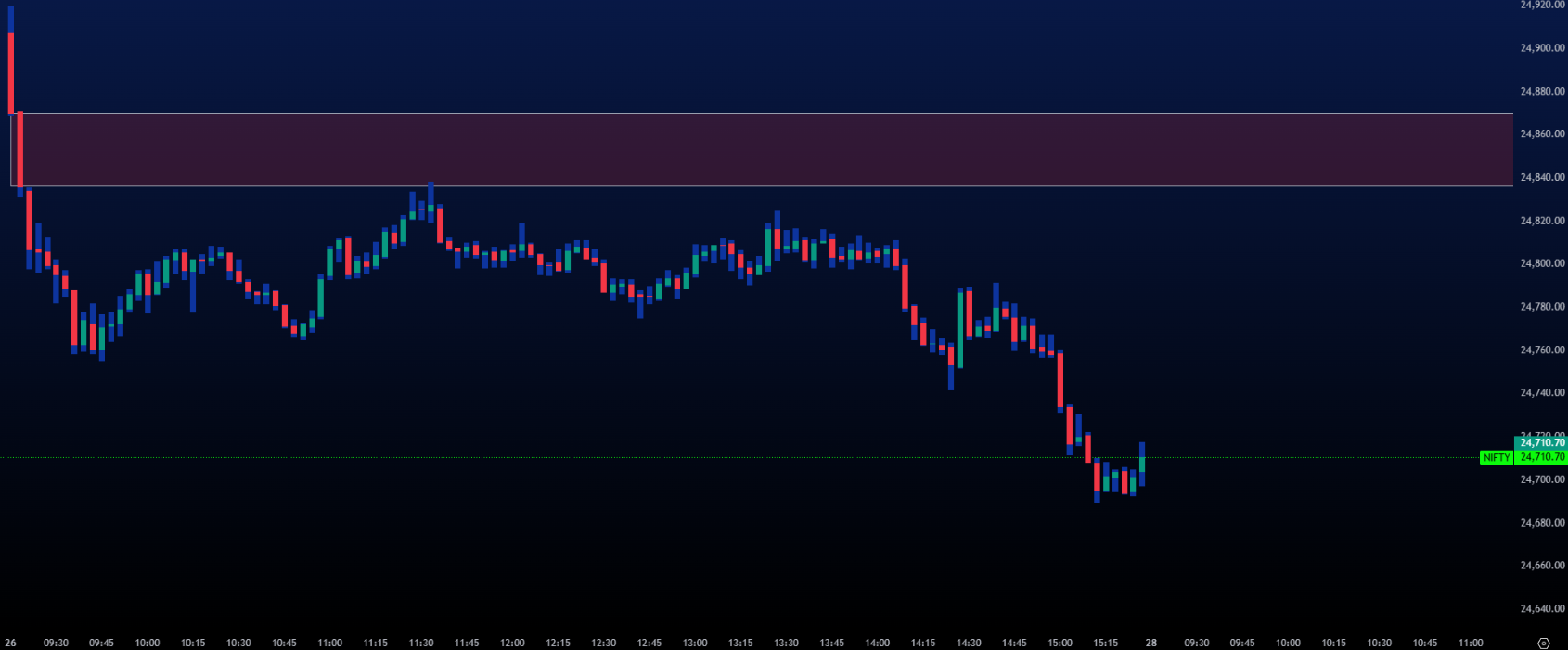
The market’s sudden and rapid fall from the opening bell put many positional trades in jeopardy, including my own. The initial gap-down opening at 24,899.50 and the subsequent slide to a low of 24,689.60 highlighted the importance of a well-defined risk management strategy.
To manage my positional trades and mitigate potential losses, I immediately employed a hedging strategy. The trending nature of the market throughout the day meant that I had to continuously buy to manage my risk. It was a challenging day that required constant monitoring and quick decision-making. By the end of the trading session, my hedging allowed me to exit my positions safely,
Chapter 1: The Opening Zone
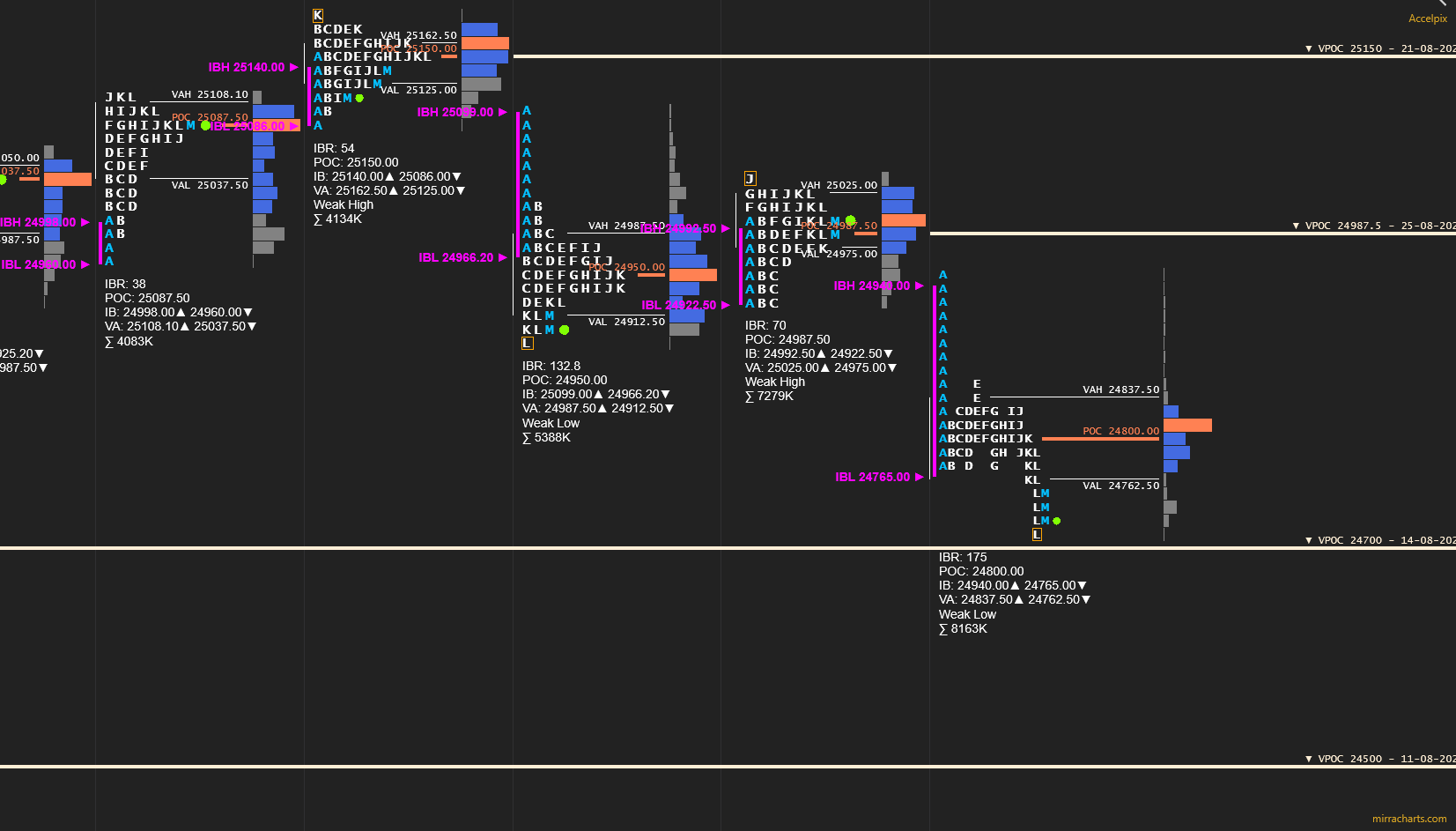
The Nifty opened with a significant gap down at 24,899.50, a clear signal of the bearish sentiment. After touching a high of 24,919.65 in the initial moments, the index quickly reversed, showing no sign of a recovery. The low for the day was 24,689.60, with the Nifty closing at 24,712.05. The overall market decline of 255.70 points (1.02%) and a VIX (India VIX, the volatility index) rise of 3.66% confirmed the market’s negative breadth and increased uncertainty.
Chapter 2: The Early Movement
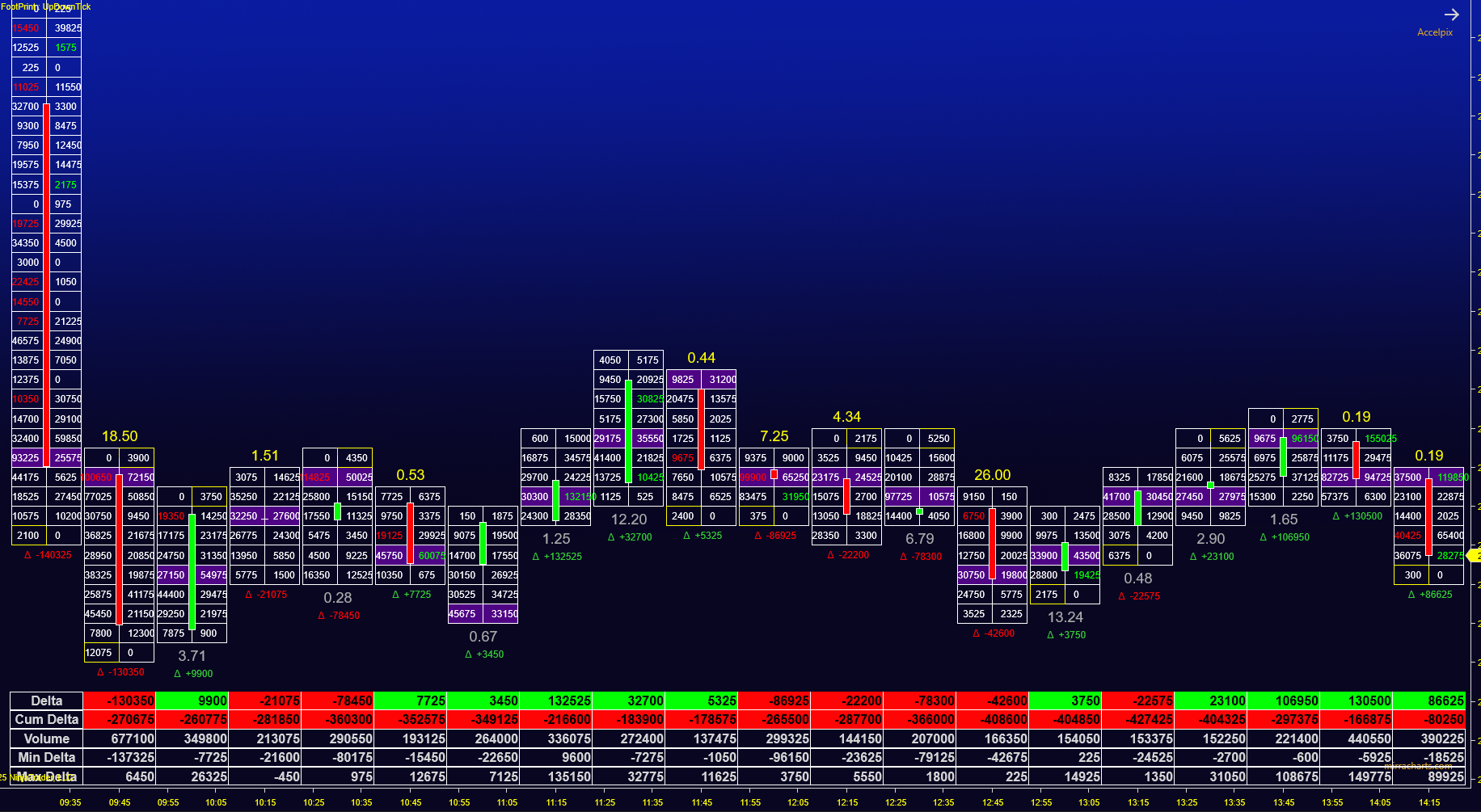
The market’s bearish intent was evident from the very first 5-minute candle. The Nifty future’s volume of 216,900 with a negative delta of -7200 was a strong indication of heavy selling pressure. This was followed by a sustained negative delta throughout the morning, with a delta of -75150 at the 9:20 AM candle, confirming the trending nature of the market.
While there was a brief attempt by buyers to absorb selling pressure around 9:45 AM, leading to a minor recovery, this was short-lived. The market was rejected from the day’s starting FVG (Fair Value Gap), which served as a strong resistance level. Selling liquidity was swiftly absorbed, creating a selling imbalance that fueled a continuous downward trend for the rest of the day, with the market closing below the crucial 24,800 level.
Bonus Point: Key Levels to Watch
For the market to show any signs of a bullish reversal, it must decisively cross and sustain above the 24,900 mark. The current market structure suggests that any rally will face strong resistance at this level.
Furthermore, with the VIX trading at lower levels, strategies like short straddles and short strangles require extreme caution. While theta decay may favor these strategies, a sudden spike in volatility, fueled by external factors or news, could create significant problems and lead to rapid losses. It is crucial to manage risk meticulously and be prepared for potential volatility shocks.
Chapter 3: Open Interest Analysis
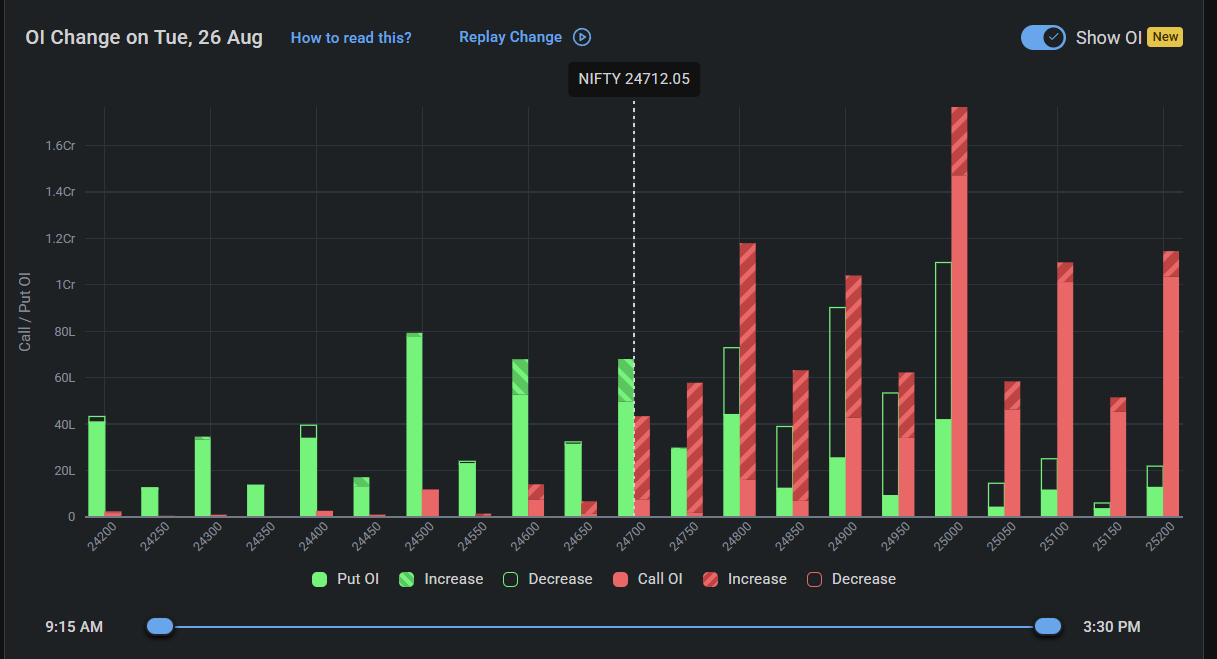
The options open interest data provides a clear picture of market sentiment. The highest concentration of Call Open Interest (OI) was observed at the 25,000 strike price, with negligible Put OI at the same level. This indicates that a large number of market participants believe the market will remain bearish and that 25,000 will act as a strong resistance. While this generally points to a negative outlook, it is essential to look beyond the surface level. For a deeper understanding of the reality of open interest, I encourage you to read my detailed blog post on the subject.
Chapter 4: Trading on a Downside Market
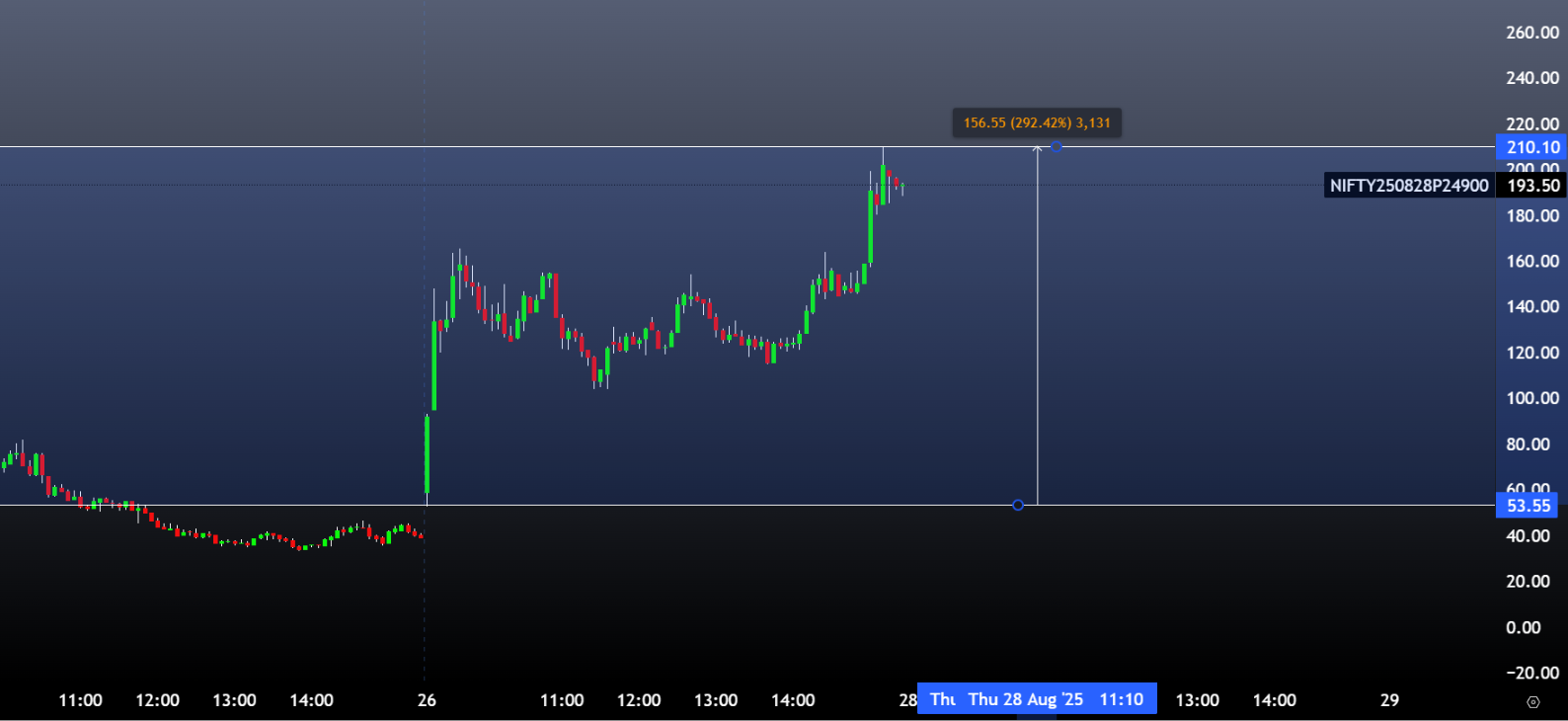
On a day like today, traders who implemented a Put buying or Call selling strategy would have reaped good profits. However, as noted earlier, the increased volatility meant that traders using short straddle and short strangle strategies faced a challenging time managing their positions, highlighting the risk associated with these strategies during unexpected market moves.
Chapter 5: Sectoral Movement
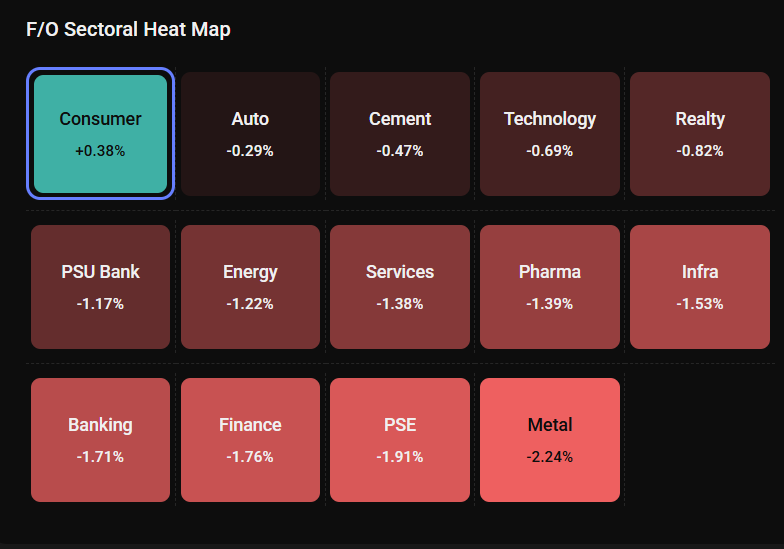
The market’s weakness was widespread, with almost all sectors closing in the red. The only exception was the consumer sector, which managed to hold its ground. This broad-based decline across key sectors signals a lack of conviction among investors and a clear risk-off sentiment.
Chapter 6: Global News & Macroeconomic Headwinds
The market’s reaction was a direct response to the news of the impending US tariffs. The draft notice proposing up to 50% tariffs on Indian goods from Wednesday created significant anxiety. This news also contributed to the Indian Rupee’s decline for the fifth consecutive session against the US dollar, which further exacerbated the negative sentiment in the equity market.
Disclaimer: I am not a SEBI registered analyst. This blog post is for educational purposes only. Investing in the securities market is subject to market risks. Please consult your financial advisor before making any investment decisions. The views expressed here are my personal thoughts and experiences, and I may be wrong. Please treat this as a learning resource and not as financial advice.
Comments are closed