



A Practical Guide for Retail Traders and Aspiring Full-Time Market Participants

Introduction: Why the Stock Market Looks Easy, but Isn’t
Everyone entering the stock market dreams of becoming the next Warren Buffett, Charlie Munger, or Rakesh Jhunjhunwala. Their legendary wealth was not built overnight—it took decades of discipline, compounding, and consistency. In fact, Buffett accumulated over 90% of his wealth after the age of 50, thanks to the power of long-term investing and a solid mindset.
However, modern traders often chase quick money. The internet is filled with flashy P&L screenshots, selling dreams of instant success. But the truth is:
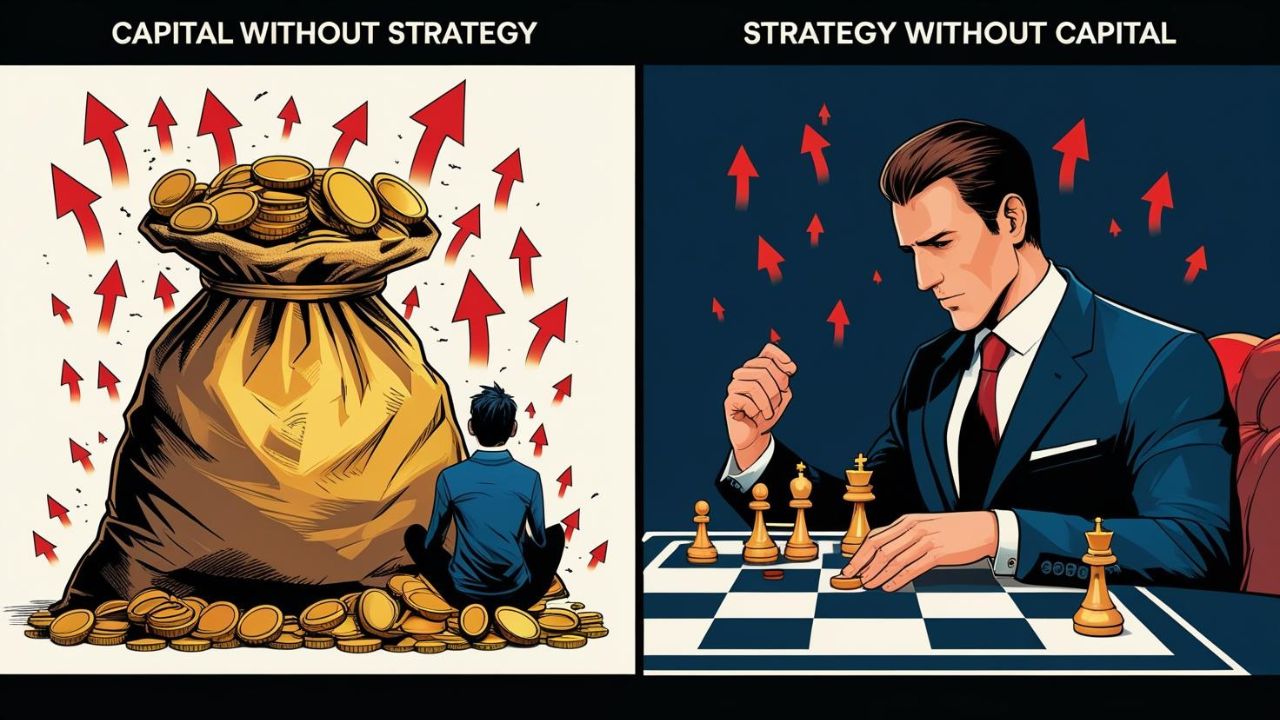
> Only two things truly matter in the stock market: CAPITAL and STRATEGY.
Capital vs Strategy: Why Both Are Equally Critical
If you have capital but no strategy, you’ll likely lose everything.
Markets will eventually take back any random profits unless you have a well-defined and tested strategy.
If you have strategy but no capital, frustration will follow.
Imagine earning 1% per trade—on ₹1 lakh, that’s ₹1,000. That won’t even cover basic monthly expenses, let alone build wealth.
—

The Small Capital Trap – Why the Middle Class Struggles
For middle-class individuals, stock market trading becomes a high-risk game because:
They are forced to be aggressive due to low capital
They can’t afford wide stop losses
They often skip hedging due to lack of funds
They lean toward buying options, which statistically have 1/3 probability of success
They avoid selling options, which has a 2/3 probability of success, due to high margin requirements
> A simple math:
To earn ₹1 lakh/month with 1% return per month, you need ₹1 crore capital.
—
Why Option Selling Is a Game of Capital
Large traders often sell far OTM call and put options in bulk. Even with conservative strategies, they generate consistent income.
But retail traders? They:
Sell naked options without hedges due to capital constraint
Exit trades too early due to fear of loss
Overtrade in pursuit of making 10–20% in a day
Get trapped emotionally and financially
This creates a cycle of hope → aggression → loss → regret.
—
Practical Advice: What Should Small Capital Traders Do?

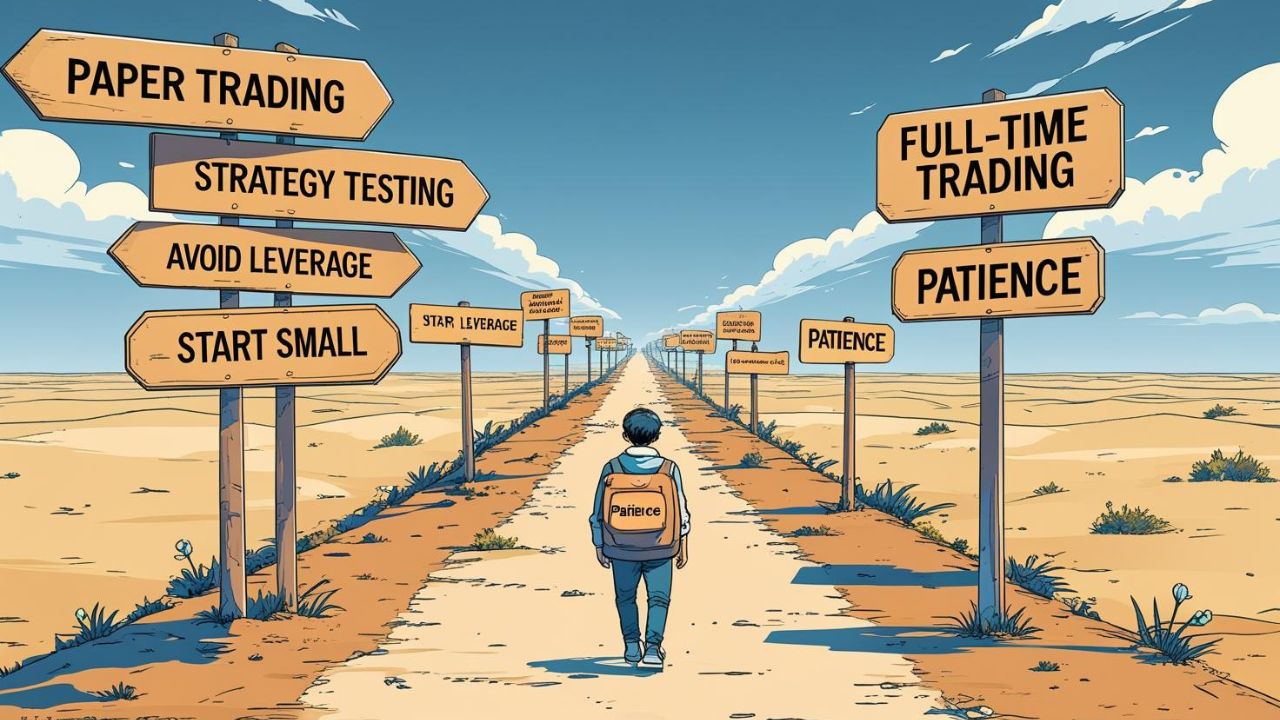
Step-by-Step Roadmap
1. Start with paper trading for 3–6 months
Test strategies like Iron Fly, Iron Condor, Ratio Spread
Understand market structure, delta, vega, gamma, and IV
2. Avoid leverage in the initial phase
Leverage is a killer without experience
3. Begin with small capital, with real trades only after confidence
Even ₹20,000–₹30,000 is enough to start with debit spreads or hedged positions
4. Treat learning as an investment
But do not pay blindly to mentors or courses promising unrealistic returns
Validate every strategy through data and personal observation
5. Keep 2 years’ of family expenses separately
If you plan to go full-time, financial cushion is non-negotiable
6. Never borrow to trade
Loans and markets don’t mix. If you lose borrowed money, stress multiplies
7. Set realistic ROI expectations
Target 1%–3% per month, anything more is bonus
—
Compounding: The Real Game Begins After Patience
If you earn 1% monthly on ₹10 lakh, that’s ₹10,000 per month. But:
In 5 years with compounding, your capital grows to ₹18.4 lakh
In 10 years, it becomes ₹33.1 lakh
Without emotional burnout or excessive risk
Even the best in the business—like Buffett and Munger—have CAGR between 18%–22% over decades.
Final Thoughts – Stay in the Game Long Enough
Don’t compare your Day 1 with someone else’s Year 10. If you’re middle class:
Use your low-capital phase as a learning playground
Master hedging strategies
Avoid emotional comparison
Focus on becoming systematic, disciplined, and data-driven
The market rewards consistency, not emotion.
> “Capital builds wealth, but strategy preserves it. Without both, the market is a casino.”

Comments are closed