


The Indian stock market witnessed a profit-booking session on Tuesday, November 18th, ending a six-day winning streak as the Nifty 50 surrendered the 26,000-mark. Despite a small gap-up open, the bears took control, pushing the benchmark index lower by 103.40 points (-0.40%). This reaction was largely driven by weak global cues and a significant macro event—the record-high Indian trade deficit.
Nifty 50 Market Summary and Price Action
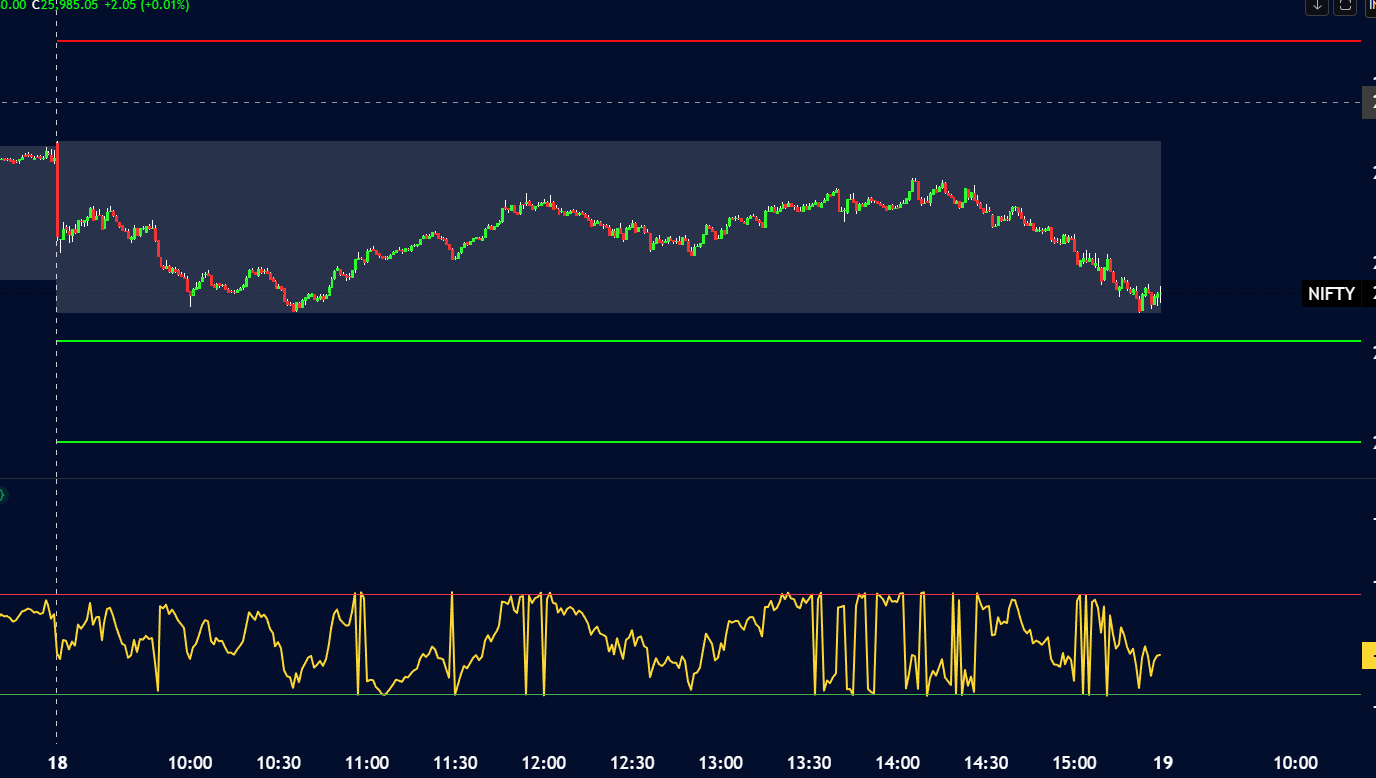
The Nifty opened with a slight gap-up of 8.35 points at 26021.80 and briefly touched a high of 26029.85. However, the market, already carrying negativity from the previous day’s global fall, immediately encountered selling pressure. The low for the day was marked at 25876.50, and the closing price (LTP) settled at 25910.05.
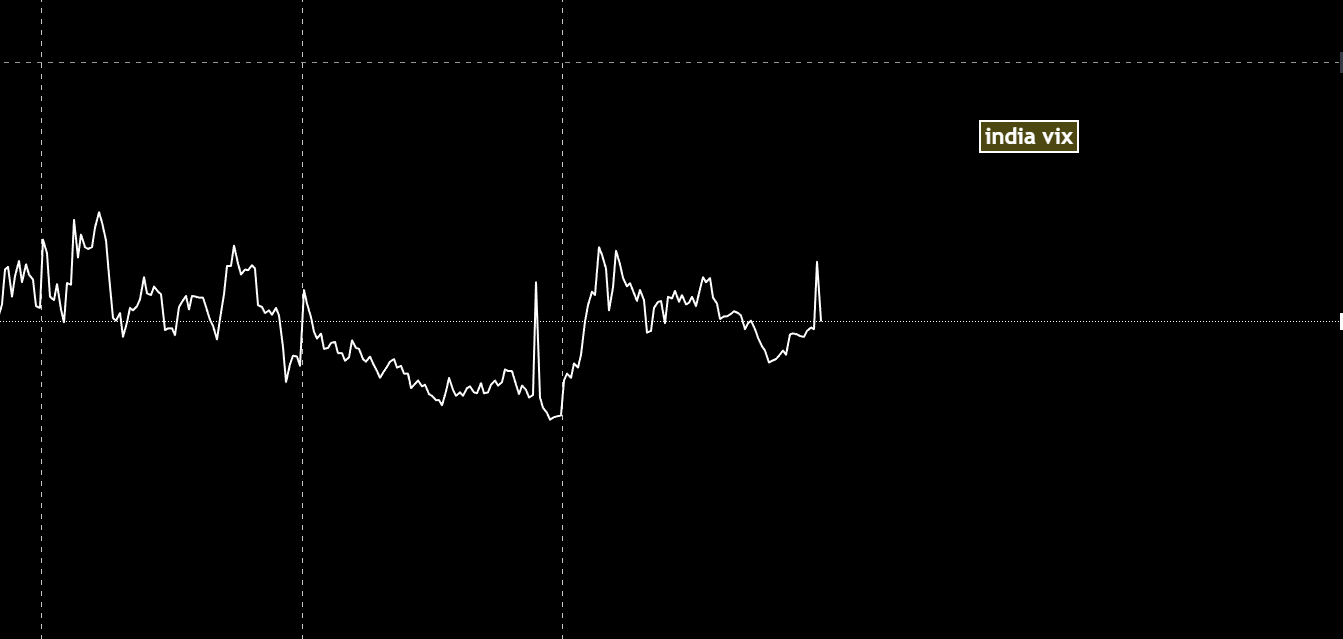
Overall, the market was significantly down by 103.40 points (-0.40%). The India VIX (the ‘fear index’) rose by 2.63%, with its current value at 12.10, signaling an increase in market volatility and caution among traders ahead of the weekly expiry.
Market Summary & Why the Market Fell
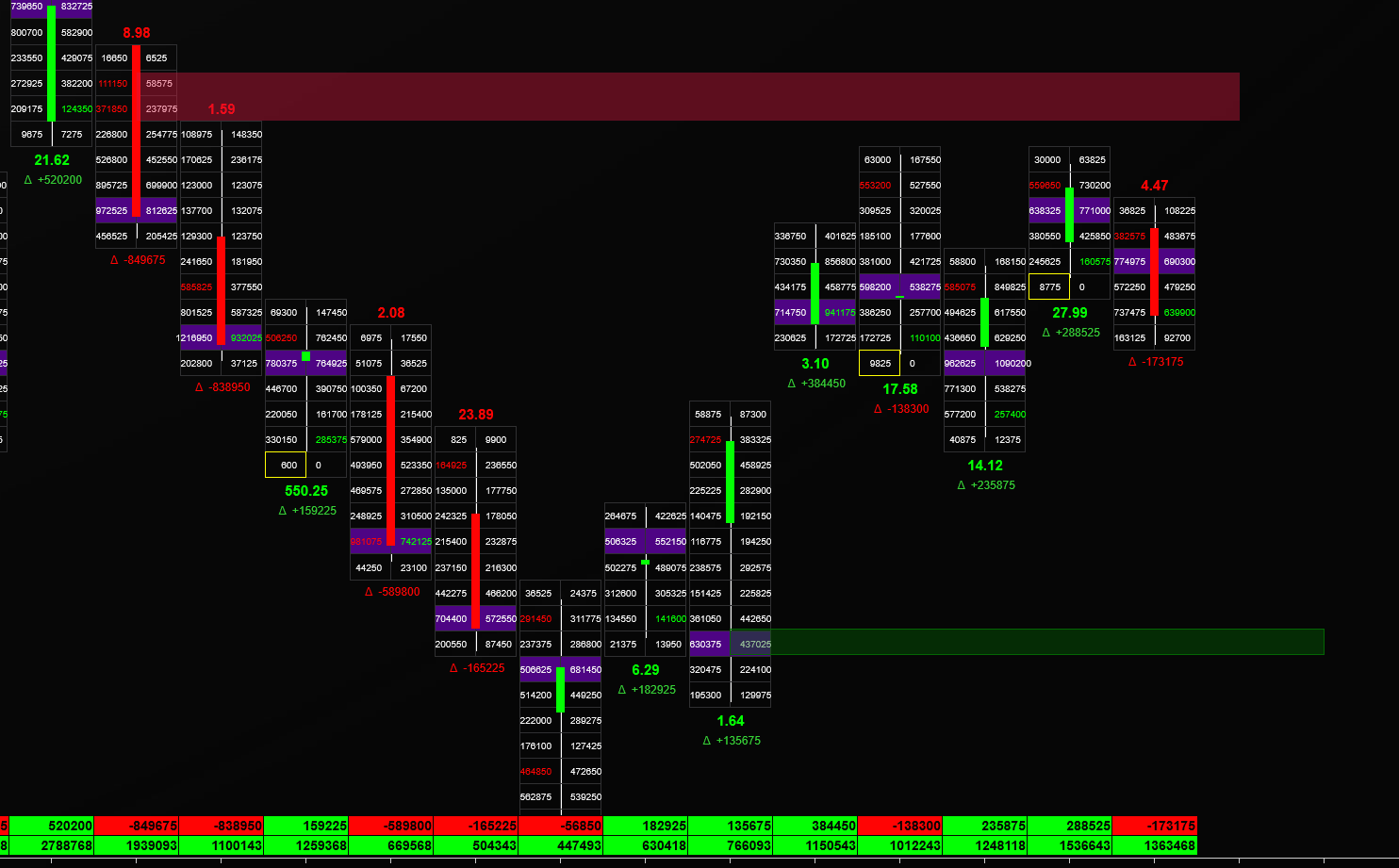
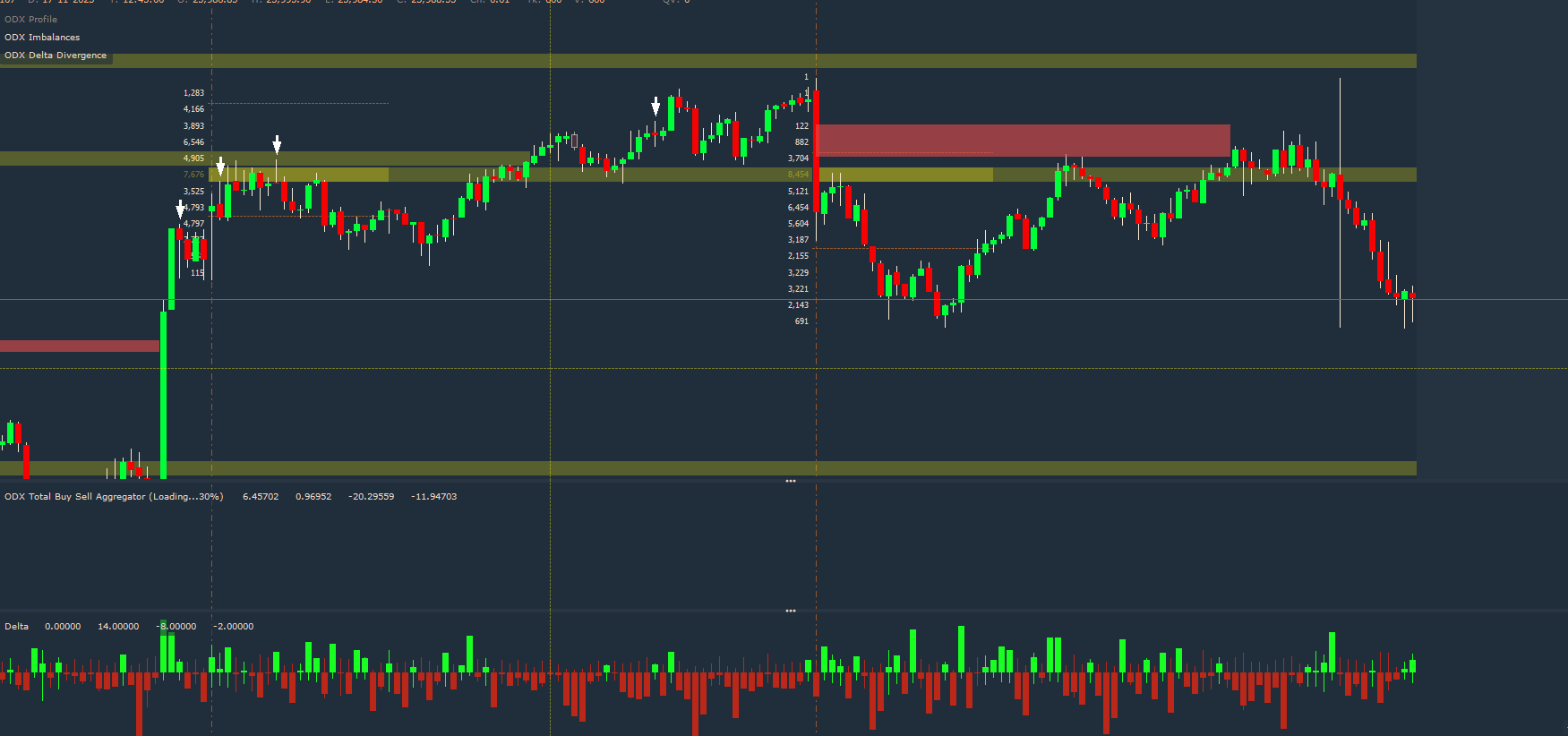
The market opened almost flat, but the negativity stemming from the global market decline was palpable. Selling began immediately, leading to a sharp fall in the first 5 minutes. The negative delta percentage stood at a high 31.25, which clearly indicated initial seller strength.
Around 10 AM, buyers attempted to enter the market, leading to a recovery driven by a buying imbalance. However, this recovery lacked conviction and was unable to cross the high range of the first 5-minute candle. The index subsequently consolidated for a while. Critically, during the closing hours, renewed and intense selling pressure emerged, pushing the market down near the 25900 level. This closing action effectively shifted the intraday sentiment from any potential positivity back into clear negativity.
The key drivers for the market decline today were:
- Weak Global Cues & Profit Booking: Global markets were weak, initiating a risk-off sentiment that triggered profit booking in the domestic market after a sustained rally.
- Record Trade Deficit: A major domestic event was the announcement that India’s October trade deficit hit a record high, primarily due to a surge in gold imports. This macroeconomic pressure weighs heavily on investor sentiment.
- Rupee Movement: The Rupee ended flat as modest capital inflows countered the prevalent global risk-off pressure.
Technical & Open Interest (OI) Analysis
Technical Points:
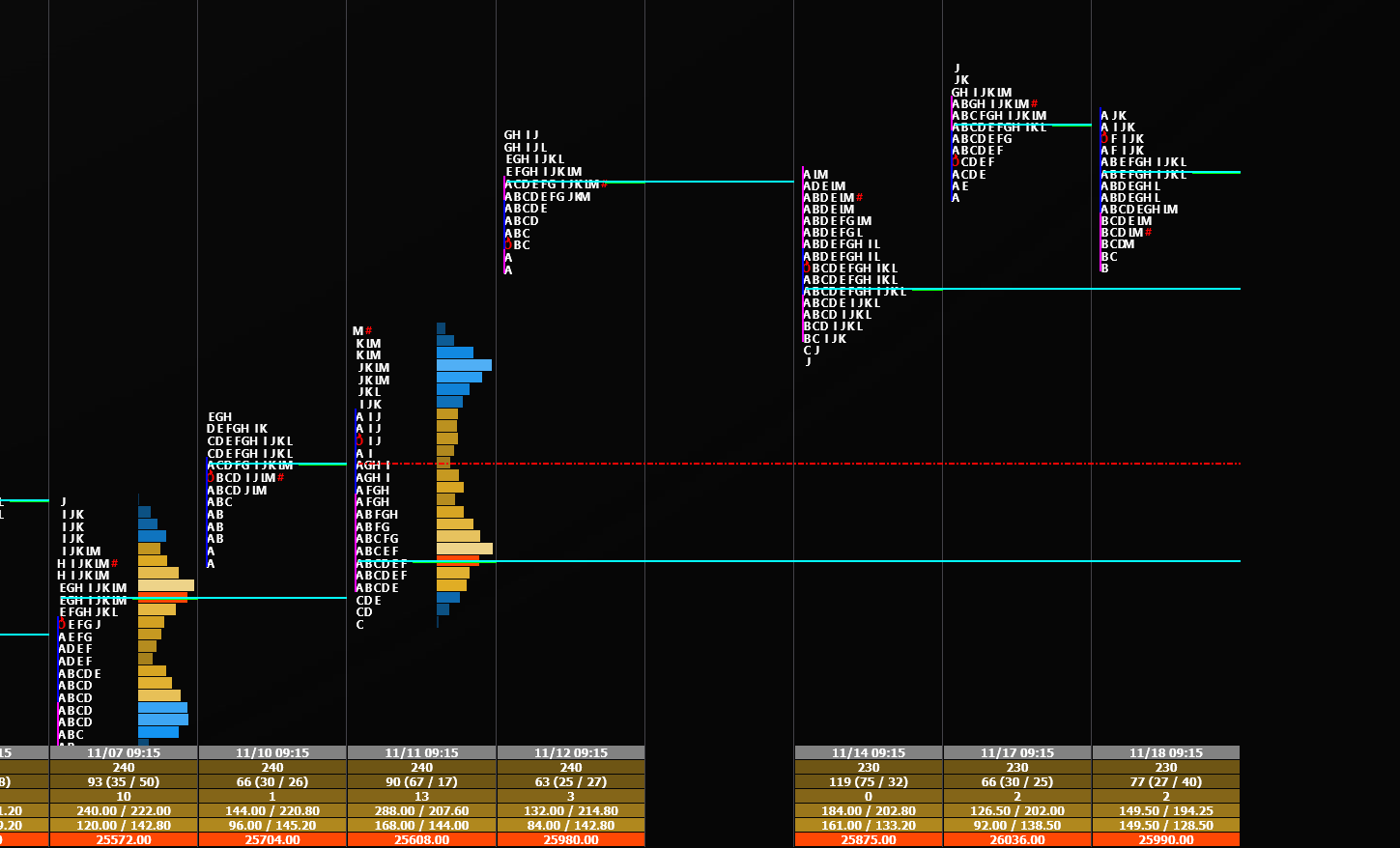
Today’s Point of Control (POC) was located at 25970.
The immediate Resistance level for the index is identified at 26100.
The crucial Support level to watch is 25800.
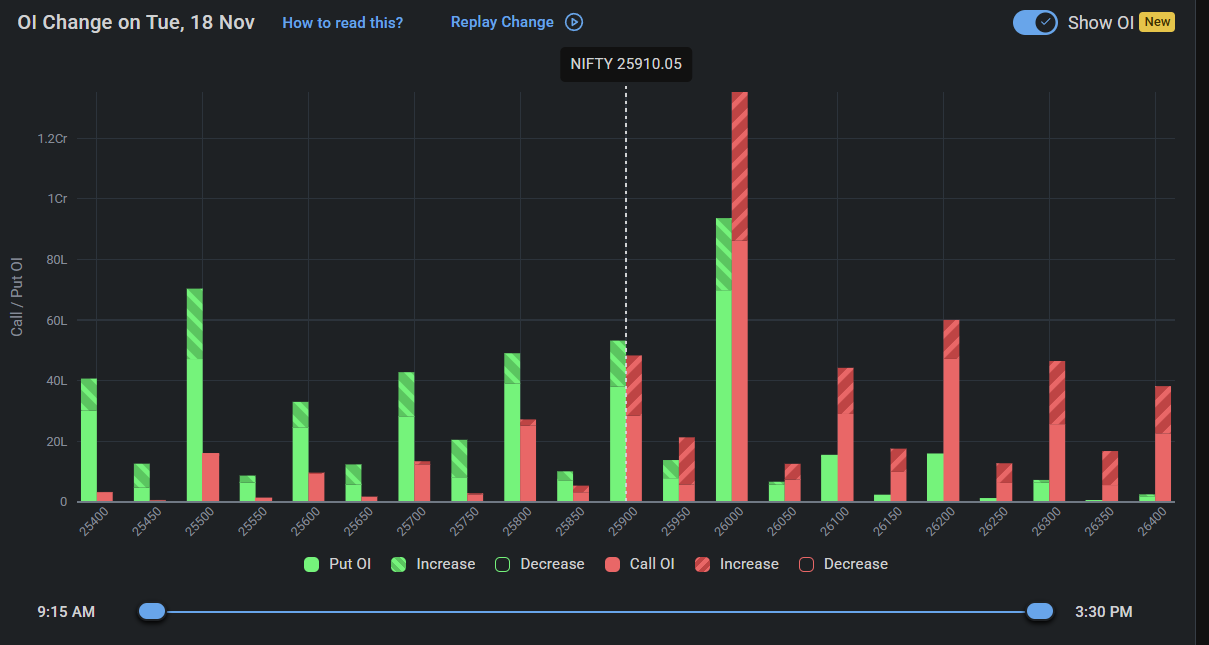
Open Interest for November 25th Expiry:
The highest Call Open Interest (COI) is significant at the 26000 strike price, solidifying this level as a major psychological and technical resistance zone.
The highest Put Open Interest (POI) is concentrated at 25500, establishing this as the strongest base or support for the current series.
Sectoral Movement and Global News
- Sectoral Movement:
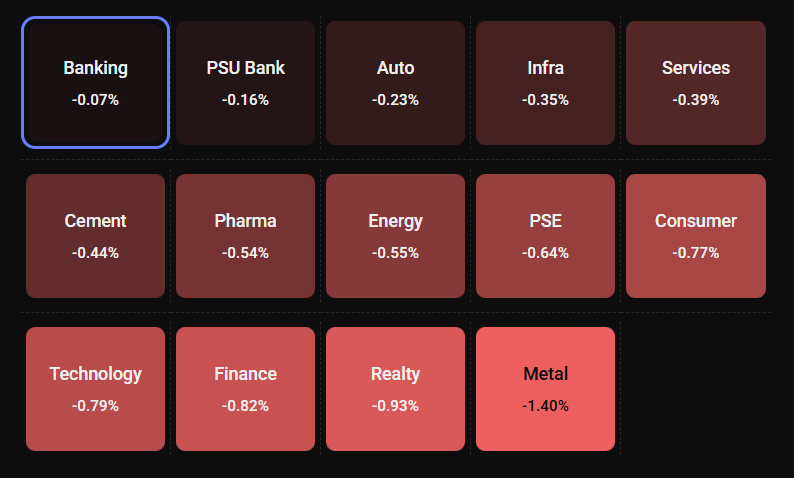
- All major sectors closed negative today, indicating a broad-based selling event across the market.
- The only notable gainer in the Nifty 50 basket was Bharti Airtel.
- Global News:
- India’s October trade deficit hits a record high on a surge in gold imports.
- Rupee ends flat as modest inflows counter global risk-off pressure.
Bonus Point: Trade Risk Management for Volatile Markets
Due to the persistent global market volatility, traders must adopt a defensive approach:
- Prioritize Intraday Trading: Focus on trades that are closed within the day to avoid overnight risk exposure.
- Avoid Naked Positional Trade: Do not carry unhedged positions overnight.
- Hedge Your Positions: If you absolutely need to carry a trade overnight, it must be protected with hedges. The core function of the options market is to control risk, not simply to speculate.
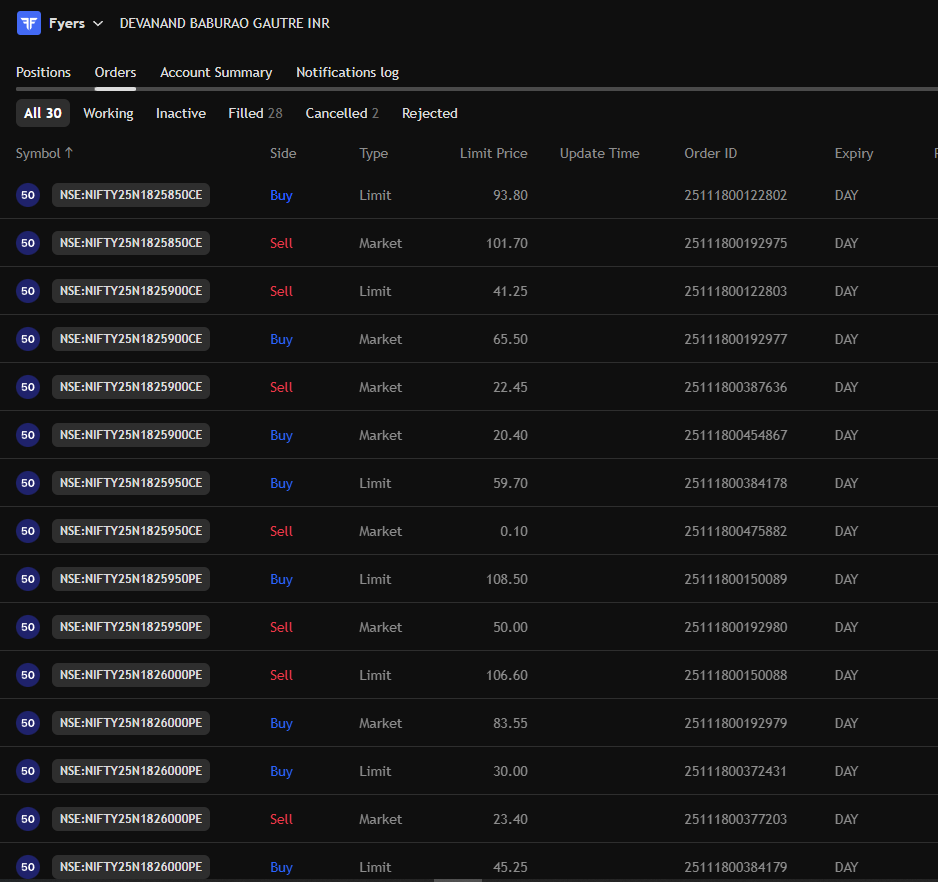
My Trade Description
Today’s price action started disappointingly. The gap-up open quickly failed, and the powerful initial selling (evidenced by the 31.25% negative delta) confirmed the bearish sentiment. Although a strong counter-move by buyers materialized around 10 AM, their inability to reclaim the opening range and sustain the momentum was a clear warning. The subsequent consolidation failed to turn into a breakout, and the final selling wave near the closing bell—pushing the Nifty near 25900—validated the prevailing negativity. My trades were structured to capitalize on this breakdown and the shift in sentiment throughout the day.
Disclaimer: I am not a SEBI registered analyst. This blog post is for educational and learning purposes only, reflecting my personal thoughts and market observations. Trading in the security market involves risks. Please consult your financial advisor before making any investment decisions. I am not associated with or promoting any trading platform or course.
Comments are closed